General
AI Chat in Bahasa Melayu: What It Can Do, Where It Falls Short, and How to Use It Well
· By AIHQ Team

The uncomfortable claim: Malay output quality is an evaluation problem, not a feature gap
Here is a position that will not win friends with tool vendors: for most Malaysian organisations, the question is not "does AI chat support Bahasa Melayu?" Every major model now produces fluent Malay. The question is whether your organisation can tell the difference between fluent Malay and correct Malay on the tasks you actually intend to deploy.
That distinction matters because Malay output quality varies far more by task than by model. A tool that writes a clean, natural employee announcement may quietly mis-handle formal register in a statutory letter, mangle a Johor-specific operational term, or confidently mistranslate a sentence that mixes Malay, English and Chinese. IT and data leaders evaluating Bahasa Melayu AI chat capability should treat this as a workflow-risk assessment, not a procurement checklist.
This article covers what these tools handle reasonably well, where they fall short, and a practical way to decide which Malay-language tasks are safe to route through an AI chat interface — and which require human verification before the output leaves your team.
What Malay-language AI chat actually does well
Large language models are strongest on high-frequency, well-documented language patterns. Bahasa Melayu has a comparatively smaller digital corpus than English, but it is well-represented enough for a surprising number of tasks.
Summarisation of Malaysian text. AI chat tools handle summarisation of Malay news articles, internal memos and meeting notes competently. The task is tolerant of small stylistic errors because the reader is checking for the gist, not the register.
Translation from English to Malay for internal use. Draft translations of internal documentation, training materials and process notes are usually usable as a starting point. Quality is sufficient for internal consumption, where a colleague can spot gaps.
Simple drafting in an informal register. Short WhatsApp-style messages, internal reminders, casual updates and social captions in Malay come out natural enough to use with light editing.
Structured extraction. Pulling dates, names, figures and action items out of a Malay document tends to work well because the model is pattern-matching, not composing.
Bilingual note-taking. Where your team already operates in a mixed register, entering a prompt in one language and asking for output in another is generally reliable for low-stakes work.
Notice the common thread: these are tasks where the output is checked, consumed internally, or where errors are minor. None of them are statutory, legal, customer-facing or financial.
Where it falls short — and why the failures cluster
The failures are not random. They cluster around four predictable categories, and knowing them changes how you design your rollout.
1. Formal register and institutional Malay
Malay has a wide register range: from casual pasar speech to highly formal bahasa istana and government administrative style. AI chat tools are trained on a wide mix, and they often default to a mid-register that reads as either stiff or slightly informal depending on the reader.
For statutory correspondence, official HR policies, government submissions or anything a regulator or lawyer will read, machine-generated formal Malay needs human review by someone with professional written Malay competence. This is the single most consequential limitation for regulated and public sector organisations.
2. Code-switching
The reality of Malaysian workplace communication is that most of it is not monolingual. A single sentence can move through Malay, English, Mandarin and Tamil, sometimes within a clause. AI chat tools can handle bilingual English–Malay reasonably well, but reliability drops sharply the more languages are mixed in the same passage.
The practical consequence is that a Malay briefing document with embedded English technical acronyms and Mandarin names is a genuinely higher-risk input than a clean monolingual document.
3. Local terms, state-level variation and abbreviations
Malay is not a monolith. Operational vocabulary varies by state, by industry and by organisation. A term routine in one agency may be unfamiliar or misleading in another. Acronyms in particular are a weak point: models frequently expand an acronym to the wrong organisation, or confidently invent one.
4. Anything with numerical, legal or factual stakes
If the output will be used to make a decision, quoted in a contract, published as a statistic or used in a patient or student interaction, the model's fluency is not evidence of its accuracy. This is not a Malay-specific problem, but it compounds in Malay because fewer reviewers can confidently catch a subtle error.
A rapid framework for evaluating any Malay-language AI chat task
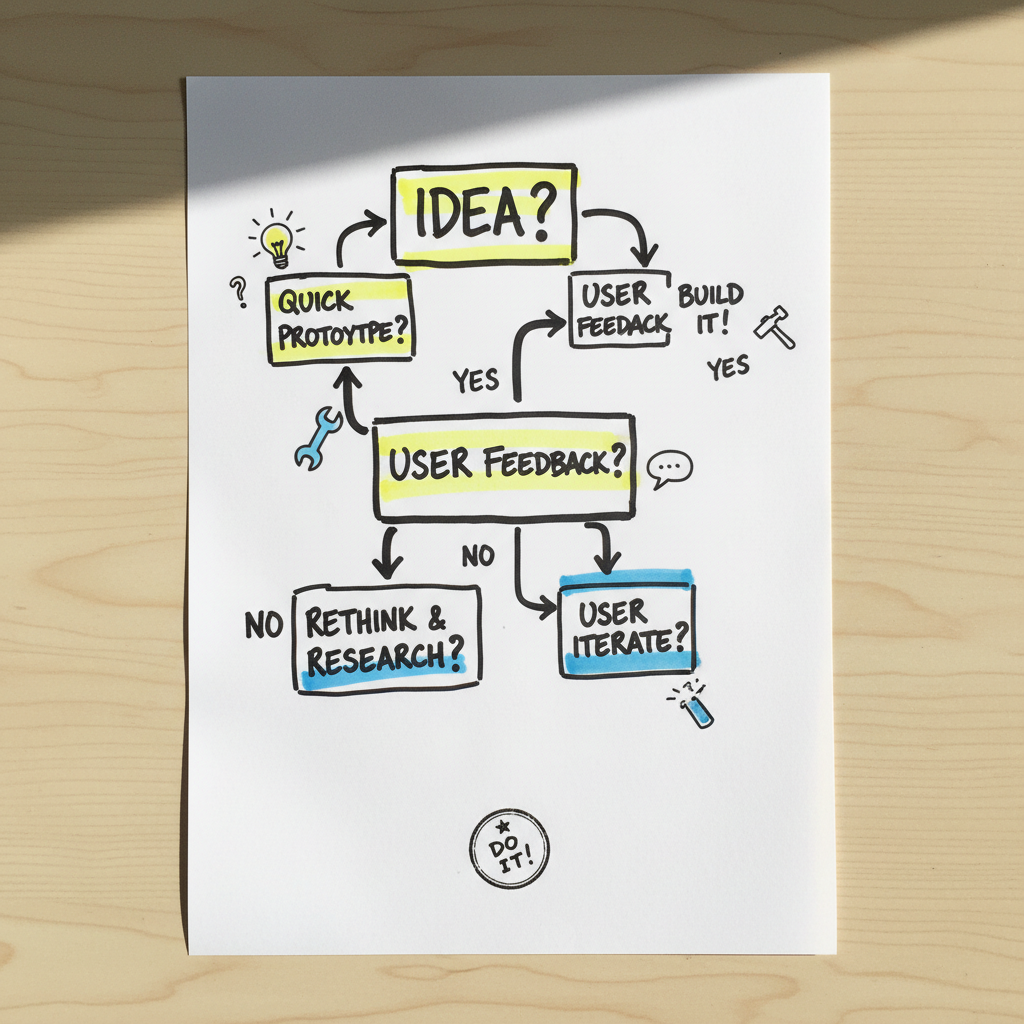
A four-question check before routing any Malay-language task through AI chat.
Use this four-question framework before routing a Malay-language workflow through an AI chat tool.
| Question | If the answer is no |
|---|---|
| Will a competent Malay reader inspect the output before it is used? | Route elsewhere or add mandatory review |
| Is the input monolingual, or bilingual English–Malay? | Flag code-switched inputs as higher-risk |
| Is the output internal, or does it leave the organisation? | Internal use can proceed with light review; external use needs sign-off |
| Does the task require statutory, legal or financial correctness? | Treat as human-led with AI assist, not AI-led |
For IT and data leaders, the practical takeaway is: define your language risk boundaries per workflow before rollout, not during an incident.
How to write better prompts for Malay-language output
Better prompting does not fix the structural limitations above, but it materially improves results within the safe zone.
Specify the register explicitly. Ask for bahasa rasmi for formal correspondence or bahasa santai for internal chat. Left unspecified, models default to a mid-register that fits neither.
State the audience. "For a factory supervisor in Klang" produces materially different output than "for a government officer."
Provide your own terminology list. Give the model your organisation's preferred Malay terms for recurring concepts and insist it uses them. This is the single highest-leverage fix for local term drift.
Ask for a bilingual output where verification matters. Requesting the Malay and English side by side makes errors visible to reviewers who are more comfortable in English.
Tell it to flag uncertainty. Instruct the model to mark any term or acronym it is not confident about, rather than filling the gap.
Request source-grounded output. Paste the source document and ask the model to work only from it, rather than relying on its own knowledge of Malay.
The HRD Corp and capability question
Here is the part most tool evaluations skip: language quality is a capability question as much as a technical one.
A team that has been taught how to review Malay-language AI output, when to escalate it and what to check first will get more value from the same tool than a team that has not. If you are already structuring a workforce reskilling programme, note that AIHQ programmes can be structured to be HRDC claimable, subject to client eligibility, grant approval and HRD Corp submission requirements — a detail worth raising early with your L&D or HR partner rather than after the training plan is fixed.
That capability gap also explains why so many Malaysian rollouts stall. Employees get tool access, discover that Malay output is inconsistent and either abandon the tool or over-trust it. Neither outcome is a tool limitation; both are capability-design failures.
Where this should change your adoption plan
The defensible position at the end of this piece is not "Malay-language AI chat is not ready." It is that Malay-language capability should be evaluated as a language-risk question per workflow, with explicit human review gates, and treated as a capability programme rather than a purchasing decision.
If your organisation is at the point of designing this, the natural next steps are: audit which workflows generate Malay output, classify them by risk, and build the review habits before scaling access. That is a structured capability question, and it is the kind of work AIHQ supports through AI training programmes and responsible AI training.
For teams that need a Malay-language conversation interface for internal knowledge or customer enquiries, custom AI solutions are often the better path than relying on a general chat tool, particularly where terminology control and escalation paths matter.
FAQ
Is AI chat in Bahasa Melayu accurate enough for official documents?
For statutory correspondence, formal HR policy or anything a regulator will read, treat AI output as a draft requiring review by someone with professional written Malay competence. Fluency is not the same as correctness in formal register.
Does code-switching break Malay-language AI chat?
Not entirely, but reliability drops sharply. Bilingual English-Malay input is generally manageable; passages mixing three or more languages, or embedding unfamiliar names and acronyms, need closer review.
Which tasks are safest to route through an AI chat tool in Malay?
Summarisation, internal translation, simple informal drafting and structured extraction are the lowest-risk tasks, provided a colleague reviews the output before it is used externally.
How do we improve Malay output without changing tools?
Specify the register (bahasa rasmi or bahasa santai), state the audience, supply your organisation's preferred terminology list, request bilingual output for verification, and ask the model to flag uncertain terms.
Can AIHQ programmes be HRDC claimable?
AIHQ programmes can be structured to be HRDC claimable, subject to client eligibility, grant approval and HRD Corp submission requirements.
Should we build a custom Malay-language chatbot instead?
Where terminology control, internal knowledge accuracy and escalation paths matter, a custom AI solution with a controlled knowledge base is often more reliable than a general-purpose chat tool.