General
ChatGPT Bahasa Melayu: Enterprise Adoption Opportunities and Challenges for Malaysian Organizations
· By AIHQ Team
When OpenAI announced ChatGPT in Bahasa Melayu, many Malaysian organisations took notice. For enterprises serving a population where Bahasa Malaysia is the national language and primary working language across government, education and many corporate sectors, the prospect of an AI tool that understands local linguistic and cultural context is significant.
But what does enterprise deployment of ChatGPT Bahasa Melayu actually involve? Is it as straightforward as flipping a language setting, or are there deeper considerations around data sovereignty, workflow integration, and responsible use that leaders should understand before rolling out at scale?
This article explores the real opportunities and challenges Malaysian enterprises should consider when adopting ChatGPT in Bahasa Melayu — and how organisations can approach adoption without overpromising or oversimplifying.
Why ChatGPT Bahasa Melayu Matters for Malaysian Enterprises
Bahasa Malaysia is not simply "Malay translated into English." It carries distinct grammatical structures, honorifics, regional expressions, and cultural conventions that generic English-language AI tools do not always capture well.
For enterprises in Malaysia, this matters across several use cases:
- Customer-facing communications — responding to enquiries in natural, culturally appropriate Bahasa Malaysia
- Internal documentation — generating memos, SOPs, policies and reports in the national language
- Public sector compliance — government and GLC organisations often require Bahasa Malaysia communication
- Training and onboarding — supporting employees who are more comfortable learning in Bahasa Malaysia
ChatGPT in Bahasa Melayu opens the door for teams across an organisation to use AI in the language they work in daily, rather than forcing English-only workflows. This can reduce friction, improve adoption, and make AI capability more accessible across diverse workforces.
Key Opportunities for Enterprise Deployment
1. More Natural, Culturally Appropriate Output
Earlier versions of ChatGPT often produced awkward or overly formal Malay text. The dedicated Bahasa Melayu model shows noticeable improvement in understanding local expressions, standard greetings, and the tone expected in formal and semi-formal Malaysian communication.
For organisations managing customer service, public relations, or government-facing documentation, this means fewer manual corrections and more usable first drafts.
2. Improved Accessibility Across the Workforce
Not every professional in Malaysia is equally fluent in English. By supporting Bahasa Melayu more accurately, organisations can extend AI access to employees who may have been hesitant to use English-only AI tools. This supports broader workforce AI adoption — a key goal for organisations serious about building AI capability rather than leaving it to a few early adopters.
3. Regional Use Cases Beyond Translation
Malay shares roots with Indonesian, and ChatGPT Bahasa Melayu can often handle both variants reasonably well. For Malaysian enterprises operating regionally, this creates potential for cross-border customer support, documentation, and communications without requiring separate language models.
4. Alignment with National Digital Initiatives
The Malaysian government has emphasised digital capability building across the public sector and broader economy. Deploying AI tools that support Bahasa Melayu aligns with national priorities for digital adoption while respecting the status of the national language.
Real Challenges Organisations Face
1. Linguistic Nuance Still Has Gaps
While ChatGPT Bahasa Melayu is a clear improvement over earlier English-only models, it is not perfect. Subtle regional expressions, dialect variations (Kelantanese, Sabahan, Sarawakian), and industry-specific terminology in Malay can still produce inconsistent results.
Organisations relying on the tool for formal documents, legal disclaimers, or regulatory communications should implement human review processes rather than assuming the output is publication-ready.
2. Data Sovereignty and Privacy Concerns
This is one of the most common questions AIHQ hears from enterprise clients. When data is processed through ChatGPT — whether in English or Bahasa Melayu — it travels through OpenAI's infrastructure. For Malaysian organisations handling sensitive customer data, financial information, or government-related content, understanding where data is stored and how it is used is critical.
Organisations should set clear guardrails for responsible AI use, especially around confidential or sensitive information. This includes establishing policies on what can be entered into public AI tools versus what requires internal or private AI solutions.
3. Off-the-Shelf is Not Always Enough
ChatGPT in Bahasa Melayu is useful for many general tasks, but some enterprise workflows require more. Customer service chatbots handling high-volume Bahasa Melayu enquiries, internal knowledge assistants answering SOP questions, or automated report generation for Bahasa Malaysia-heavy departments may need custom AI solutions or structured implementation beyond what a standalone tool provides.
Off-the-shelf tools are useful, but some workflows require custom AI solutions, automation or structured implementation.
4. Adoption is Not Just About the Tool
Making ChatGPT available in Bahasa Melayu does not automatically create effective adoption. Employees need clear guidance on:
- How to use it appropriately for their specific role
- What data is safe to input
- How to critically review AI-generated output
- When to escalate to human judgment
Sustainable adoption requires role-based capability, workflow thinking, governance and leadership alignment — not just access to a tool in a familiar language.
How Malaysian Enterprises Can Approach Adoption Responsibly
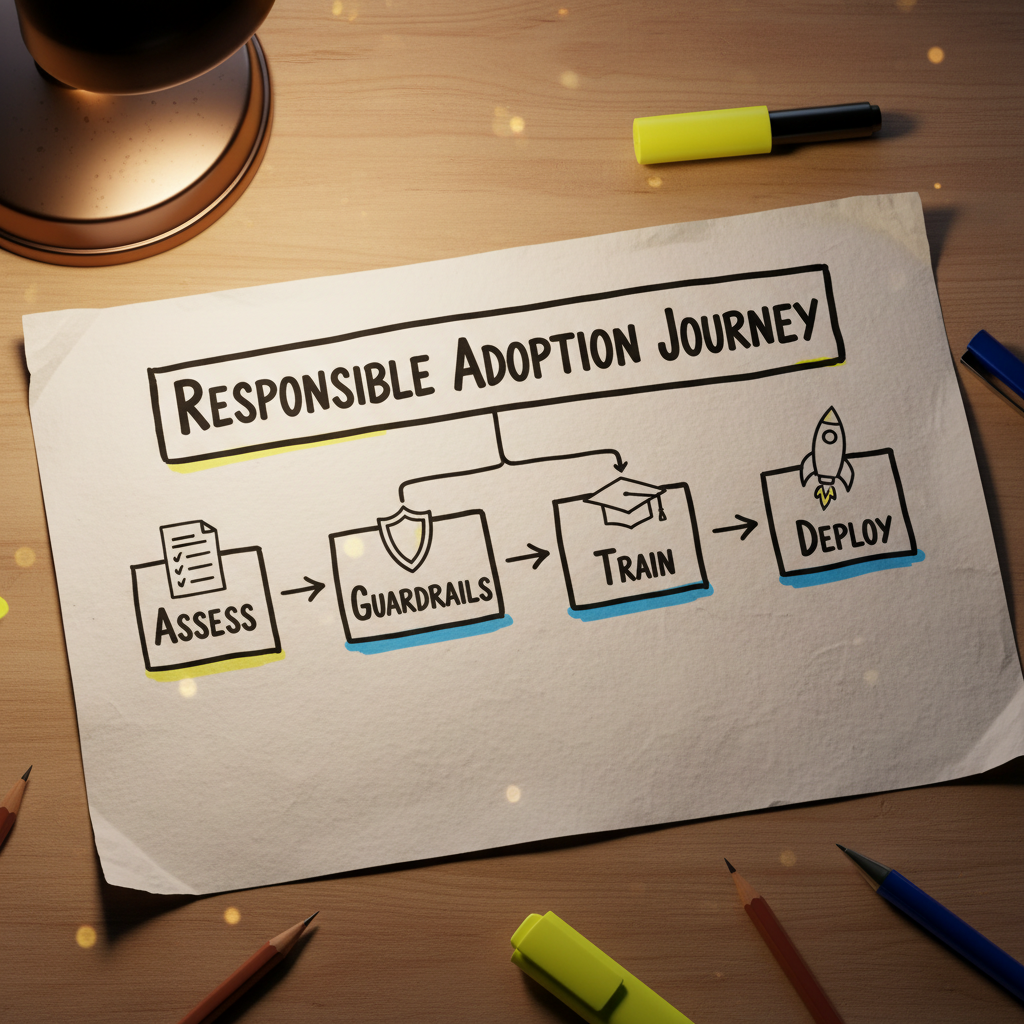
A responsible adoption approach for ChatGPT Bahasa Melayu in Malaysian enterprises
Step 1: Start with a Workflow Audit
Before deploying ChatGPT Bahasa Melayu, identify where it will actually be used. Is it for customer service, internal documentation, report generation, or training materials? Each use case has different quality, privacy and governance requirements.
Step 2: Establish Responsible Use Guidelines
Create clear policies for what teams can and cannot input into public AI tools. This is especially important for regulated industries, financial services, and government-linked organisations. AIHQ's responsible AI and governance sessions can help teams use AI safely and appropriately.
Step 3: Invest in Role-Based Capability Building
A one-hour workshop on "how to use ChatGPT in Malay" is not enough. Teams need structured training that connects the tool to their actual daily workflows — whether that is writing reports in Bahasa Malaysia, drafting customer replies, or creating internal documentation.
AIHQ offers role-based AI training designed to help organisations move beyond generic awareness into practical, department-specific capability.
Step 4: Evaluate Whether Off-the-Shelf is Sufficient
For general content generation and simple Q&A, ChatGPT Bahasa Melayu may be sufficient. But if your organisation needs a dedicated customer enquiry bot handling high volumes in Malay, or an internal SOP assistant serving a Bahasa Malaysia-speaking workforce, a custom solution may deliver more reliable, tailored results.
AIHQ has supported organisations in exploring custom AI chatbots and internal copilots designed for specific enterprise needs.
Step 5: Measure, Iterate and Govern
Adoption should not stop at deployment. Monitor how teams are using the tool, where errors or gaps appear, and whether workflows are genuinely improving. Governance should be reviewed regularly as usage scales.
What This Means for Malaysian Leaders
ChatGPT in Bahasa Melayu is a meaningful step forward for Malaysian enterprises. It makes AI more accessible, culturally relevant, and practically useful across a wider portion of the workforce.
But it is not a magic solution. Linguistic gaps remain, data privacy concerns persist, and effective adoption still requires structured capability building, clear governance, and sometimes custom implementation.
The organisations that benefit most will be those that approach adoption thoughtfully — balancing the opportunity of a Bahasa Melayu-capable AI tool with the practical realities of enterprise deployment.
Summary
| Opportunity | Challenge |
|---|---|
| More natural, culturally appropriate output | Linguistic nuance still has gaps for dialects and formal use |
| Improved workforce accessibility | Data sovereignty and privacy concerns remain |
| Regional cross-border potential | Off-the-shelf tools may not cover all workflows |
| Alignment with national digital priorities | Adoption requires more than just tool access |
For organisations ready to move beyond experimentation and into structured adoption, understanding both the promise and the limits of ChatGPT Bahasa Melayu is the first step toward real workplace impact.
FAQ
Is ChatGPT Bahasa Melayu accurate enough for formal business documents?
ChatGPT Bahasa Melayu has improved significantly but may still produce inconsistent results for highly formal documents, legal disclaimers, or industry-specific terminology. Organisations should implement human review processes before using AI-generated Malay content in official communications or regulated documents.
Can Malaysian enterprises use ChatGPT Bahasa Melayu for customer service?
Yes, ChatGPT Bahasa Melayu can support customer-facing communications in Malay, but enterprises should evaluate whether an off-the-shelf tool meets their volume, accuracy, and escalation requirements. For high-volume or specialised workflows, a custom AI chatbot may be more appropriate.
Is data shared with OpenAI safe when using ChatGPT in Bahasa Melayu?
Data processed through ChatGPT travels through OpenAI's infrastructure. Organisations handling sensitive customer, financial, or government-related information should establish clear policies on what can be entered into public AI tools and consider private or on-premise AI solutions where needed.
Do I still need AI training if the tool supports Bahasa Melayu?
Yes. Tool access alone does not create effective adoption. Training should focus on role-based workflows, responsible usage, critical review of AI output, and governance. Sustained capability requires structured learning, not just familiarity with a language setting.
Can ChatGPT Bahasa Melayu understand Malaysian dialects like Kelantanese or Sabahan Malay?
ChatGPT Bahasa Melayu handles standard formal Malay reasonably well but may struggle with regional dialects, colloquial expressions, and local slang. Organisations serving diverse linguistic audiences should test outputs carefully before relying on them for localised communications.
When would a Malaysian enterprise need a custom AI solution instead of ChatGPT?
Custom AI solutions are useful when off-the-shelf tools cannot handle high-volume workflows, require specific data privacy controls, need integration with internal knowledge bases, or must support unique business processes. AIHQ helps organisations evaluate whether off-the-shelf is enough or a custom approach is warranted.