General
ChatGPT Enterprise in Malaysia: A Practical Guide to Adoption, Compliance & Cost
· By AIHQ Team

Malaysian organisations are increasingly moving beyond casual ChatGPT use toward a deliberate question: should we adopt ChatGPT Enterprise? The business case is real — but so are the compliance, governance and capability considerations that sit around it.
For leaders in finance, retail, professional services, HR and the public sector, choosing an enterprise AI platform is only the first step. The more important work is deciding what the tool will be used for, who will use it, what data can go in, and what happens when an off-the-shelf tool hits the edge of your workflows.
This guide walks Malaysian decision-makers through what ChatGPT Enterprise actually is, what it costs in context, how it interacts with local compliance concerns like PDPA and data residency, and how to approach rollout as a structured adoption effort rather than a tool install.
What ChatGPT Enterprise Actually Is
ChatGPT Enterprise is OpenAI's business tier, designed for organisations that need more than the consumer or Plus experience. It is positioned around features that matter to companies: a higher usage allowance, admin controls, workspace management, single sign-on, and different data-handling settings compared to consumer plans.
The practical difference for a Malaysian business is not just more tokens. It is the shift from individual employees experimenting on personal accounts toward a governed, centrally managed environment — which matters far more in a corporate setting.
What you are really buying is structure: a place where usage can be overseen, where policy can be applied, and where teams work within defined guardrails rather than relying on personal accounts with arbitrary settings.
Where ChatGPT Enterprise Fits — and Where It Does Not
A common mistake is treating any single AI tool as a complete solution. ChatGPT Enterprise is genuinely useful for a wide range of knowledge work — drafting, summarising, research assistance, reporting, analysis and decision support.
But it is an off-the-shelf general-purpose tool. For many organisations that is exactly right, especially in early adoption. Teams need a capable, well-governed assistant for everyday work.
In other situations, organisations discover that a general tool does not quite fit. Examples include customer-facing chatbots that must connect to your own systems and FAQ knowledge, internal assistants trained to answer from your specific SOPs and policies, or automation that must run inside your existing approval and escalation workflows.
In those cases, the answer is often not a bigger enterprise subscription but a combination: enterprise tooling for general knowledge work, plus a custom AI solution or workflow where off-the-shelf tools are not enough.
Licensing and Cost in the Malaysian Context
ChatGPT Enterprise is priced on an annual, per-user model rather than a monthly consumer subscription. For most organisations the headline number matters less than how many employees genuinely need it, and how many would be better served by role-based training on the free tier before committing.
A thoughtful Malaysian organisation does not automatically license every employee. Instead, it thinks in terms of roles:
- Power users and AI champions who build repeatable workflows benefit most from enterprise access.
- Departmental teams doing writing, reporting, analysis and documentation can drive strong value from a governed workspace.
- Occasional users may be better served by structured fundamentals training on the free tier, saving budget for the teams where enterprise access changes daily output.
Because Enterprise pricing is quoted per organisation based on usage and seat count, the most useful planning step is a workflow audit rather than a pricing assumption. That means identifying which teams, roles and workflows will use the tool daily — and matching seats to real work.
An AI innovation bootcamp can help teams identify and prioritise which use cases justify paid seats versus which are pilot-stage or better solved differently.
PDPA, Data Residency and Responsible Use
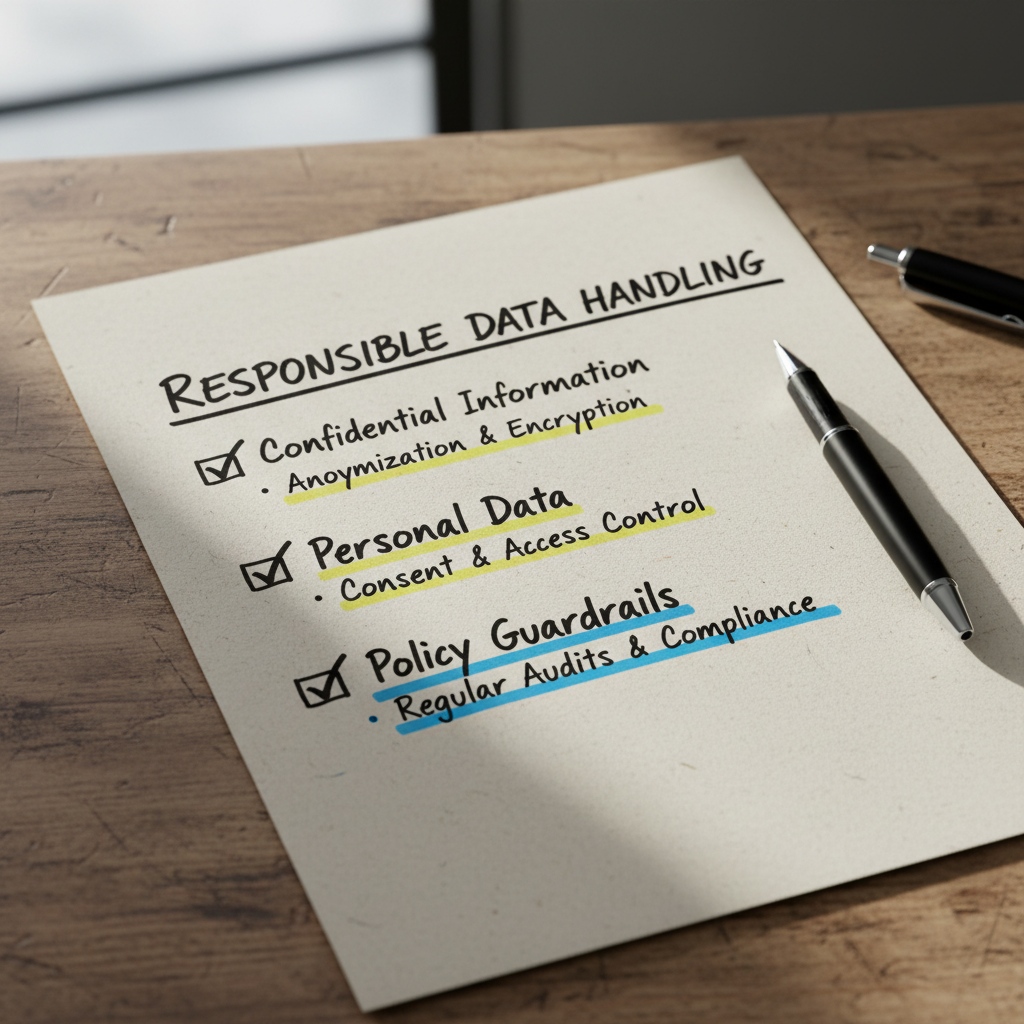
Data safety depends on guardrails, policy and people — not any single enterprise plan.
Compliance is where ChatGPT Enterprise conversations in Malaysia get serious. Two questions dominate.
Data security and confidentiality
Business-level tiers offer stronger controls around how prompts and outputs are handled compared with consumer accounts. That is a genuine step up. However, it would be misleading to treat any single enterprise plan as automatically safe for all data.
Data safety depends on the tool settings, your policies, the type of data being processed and how your people actually behave. The safe position for Malaysian organisations is clear: set guardrails for responsible use, especially around confidential client information, personal data and sensitive financial or policy material.
Teams should know what is acceptable to paste into any AI tool and what must stay inside controlled environments. A course in responsible AI training can help translate this from a policy document into daily employee behaviour.
PDPA and data residency
Malaysia's PDPA regulates the handling of personal data. Where personal data is processed by third-party AI tools, organisations must consider data protection principles, cross-border transfer considerations and the commitments made by the platform provider.
The precise implications depend on your data types, your customers' expectations, and the contractual and technical safeguards in place. This is not a field where a one-line answer applies to every business. For regulated industries and public sector bodies, the requirement is usually even more conservative.
Because requirements evolve and depend on specifics, treat this as an area requiring careful review with your legal, compliance and IT teams — rather than a claim set in stone. Practical, responsible deployment means understanding those obligations before employees begin using the platform at scale.
An executive AI briefing can help leadership teams align on governance, risk and data obligations before rollout.
Practical Adoption Across Malaysian Workflows
Where does ChatGPT Enterprise create real value for Malaysian organisations?
Finance teams
Drafting board papers, summarising lengthy reports, building analysis frameworks and preparing documentation — all supported, while a human retains final judgment on numbers and decisions.
Professional services and corporate communications
Drafting proposals, client communications, reports and presentations. Tools shorten the first-draft stage; judgment, review and client context remain the value the firm adds.
HR and operations
Drafting policies, summarising feedback, structuring job descriptions and preparing internal updates. AI can reduce repetitive writing; HR professionals still make the people decisions.
Customer-facing work
For drafting responses, triaging enquiries and supporting service delivery, enterprise AI helps. But an escalation-aware, system-connected customer enquiry chatbot is a different category — one where custom AI chatbot thinking may be more appropriate.
Across all of these, the pattern is the same: AI accelerates the work a skilled person does, and it does not replace the judgment or the human review.
Moving from Tool to Capability
A common Malaysian adoption failure is buying the enterprise licence and assuming capability follows automatically. A licence gives access. It does not create role-based skill.
Teams need to know how to use ChatGPT Enterprise against their workflows — not generic prompting tips. That means structured, role-based enablement tied to the actual reporting, documentation, analysis and communication tasks people do every day.
Organisations that invest in role-based AI training alongside the platform consistently move further than those that only change what software employees log into. Training turns a tool into a repeatable work habit.
Equally, adoption benefits from leadership alignment. If leaders agree on what the tool is for, which data can be shared and how governance applies, employees are far more likely to adopt it responsibly and consistently.
A Structured Path Forward
For Malaysian organisations, the practical adoption path looks like this:
- Clarify the intent. What workflows, roles and teams will actually use ChatGPT Enterprise?
- Match seats to work. License high-value users, and build fundamentals for the rest.
- Set the guardrails. Confirm data policies, responsible-use boundaries and PDPA obligations with compliance and IT.
- Align leadership. Agree on governance, decision rights and expected outcomes.
- Build capability. Train teams by role and workflow, not by tool feature.
- Assess what a general tool cannot do. Where off-the-shelf tools fall short, evaluate custom options.
- Measure and adjust. Review usage, adopt the habits that work and refine the roadmap.
Get Help Putting This into Practice
Choosing ChatGPT Enterprise is one decision. Making it produce real workflow improvement for your teams is another.
AIHQ helps organisations move beyond AI awareness into structured capability, practical adoption and custom solutions where off-the-shelf tools are not enough. From leadership alignment and role-based training to custom AI solutions, we work with Malaysian organisations ready to adopt AI responsibly and deliberately.
Have trained and engaged over 9,000 professionals across corporate, public sector, professional and regulated environments, AIHQ understands what structured adoption looks like in practice.
If you are evaluating ChatGPT Enterprise — or any AI rollout — and want a structured way forward, we can help.
FAQ
Is ChatGPT Enterprise safe for Malaysia PDPA compliance?
Business tiers offer stronger controls than consumer accounts, but data safety depends on your tool settings, policies, the type of data processed and how your people use it. For any tool handling personal data in Malaysia, review PDPA obligations and cross-border considerations with your legal, compliance and IT teams before rollout.
What does ChatGPT Enterprise cost in Malaysia?
ChatGPT Enterprise is priced on an annual, per-user basis and quoted per organisation based on seats and usage. Rather than comparing consumer prices, the practical step is matching licences to the workflows and roles that use the tool daily — many employees are better served by structured fundamentals training first.
Should every employee get a ChatGPT Enterprise seat?
Not necessarily. Power users, champions and departmental teams with heavy writing, reporting and analysis workloads typically justify seats. Occasional users often get more from structured role-based training on a free tier before any paid commitment.
Is ChatGPT Enterprise enough on its own, or do we need more?
For many types of knowledge work it is a strong general-purpose tool. However, customer-facing chatbots, internal assistants drawing on your own SOPs, and automation inside your workflows often need custom AI solutions on top of — or instead of — an off-the-shelf platform.
What should we do before rolling out ChatGPT Enterprise?
Clarify intent, match seats to real roles, set data and responsible-use guardrails, align leadership on governance and expected outcomes, and build role-based capability before measuring and refining. Treat it as structured adoption, not a tool install.