General
ChatGPT Malay Language Support: A Deep Dive for Malaysian Businesses
· By AIHQ Team

For a Malaysian business, the question is rarely whether to explore AI tools—it's whether those tools can work in the language your customers and teams actually use. Bahasa Malaysia is the working language of much of the country, and if ChatGPT can't handle it naturally, its practical value drops considerably.
The good news: ChatGPT has meaningful Malay language support across writing, translation, and conversation. The more useful question is how well it works for real business scenarios—not just whether it technically understands Malay, but whether it produces output you'd be comfortable sending to a customer or publishing. That's what this guide breaks down.
What "Malay language support" actually means in ChatGPT
Before evaluating quality, it helps to separate the different ways ChatGPT handles Bahasa Malaysia. There are three distinct capabilities worth understanding:
1. Writing and generation. You can ask ChatGPT to draft a marketing post, a customer service reply, or a formal internal memo in Malay, and it will generate text in that language.
2. Translation. ChatGPT can translate between English and Bahasa Malaysia, and between Malay and other languages. This is useful for localising content and for handling documents that switch between languages.
3. Conversation. In the chat interface, you can hold a full conversation in Bahasa Malaysia—in formal bahasa baku (standard Malay) and, to a reasonable degree, in casual conversational registers.
The key insight for businesses: ChatGPT's Malay support is strongest with standard, formal Malaysian usage. Like any language model, quality varies depending on context, tone, and how precisely you've described what you need.
Where ChatGPT handles Malay well
For most common business use cases, ChatGPT's Malay output is practical and workable. The areas where it performs most reliably include:
- Customer service replies for common queries, complaints, and follow-ups
- Marketing copy such as social posts, email subject lines, and short ad text
- Formal documentation including memos, meeting summaries, and policy summaries
- Translation of standard business documents between English and Malay
- Drafting internal communications that your team then reviews and refines
The general pattern is that short, standard, purpose-driven text works well. A customer reply about delivery status, a polite note about a refund policy, or a product update in bahasa baku will usually come out clean and usable—provided a human reviews it before it goes out.
Where Malaysian businesses should be careful
Strong as the fundamentals are, there are realistic limits worth planning for. Understanding these upfront helps you set appropriate expectations and build human review into your workflows.
Tone and nuance. Malay marketing that relies on slang, local idioms, or very informal bahasa pasar won't always hit the right register on the first attempt. For brand-critical content, treat ChatGPT's output as a strong draft—not a final publish-ready piece.
Local context. Datuk, bumiputera corporate etiquette, polite hedging, honorifics, and industry-specific local conventions may need correcting. Generic AI output won't know your company's specific voice.
Consistency across long documents. For longer content such as policy documents or lengthy articles, quality can drift. Break requests into sections and verify each part.
Accuracy of facts. ChatGPT can produce confident-sounding output in Malay that contains inaccuracies—just as it can in English. This matters if you're asking it to summarise policies, regulations, or financial figures. Always verify against a primary source.
A practical framework for Malaysian businesses
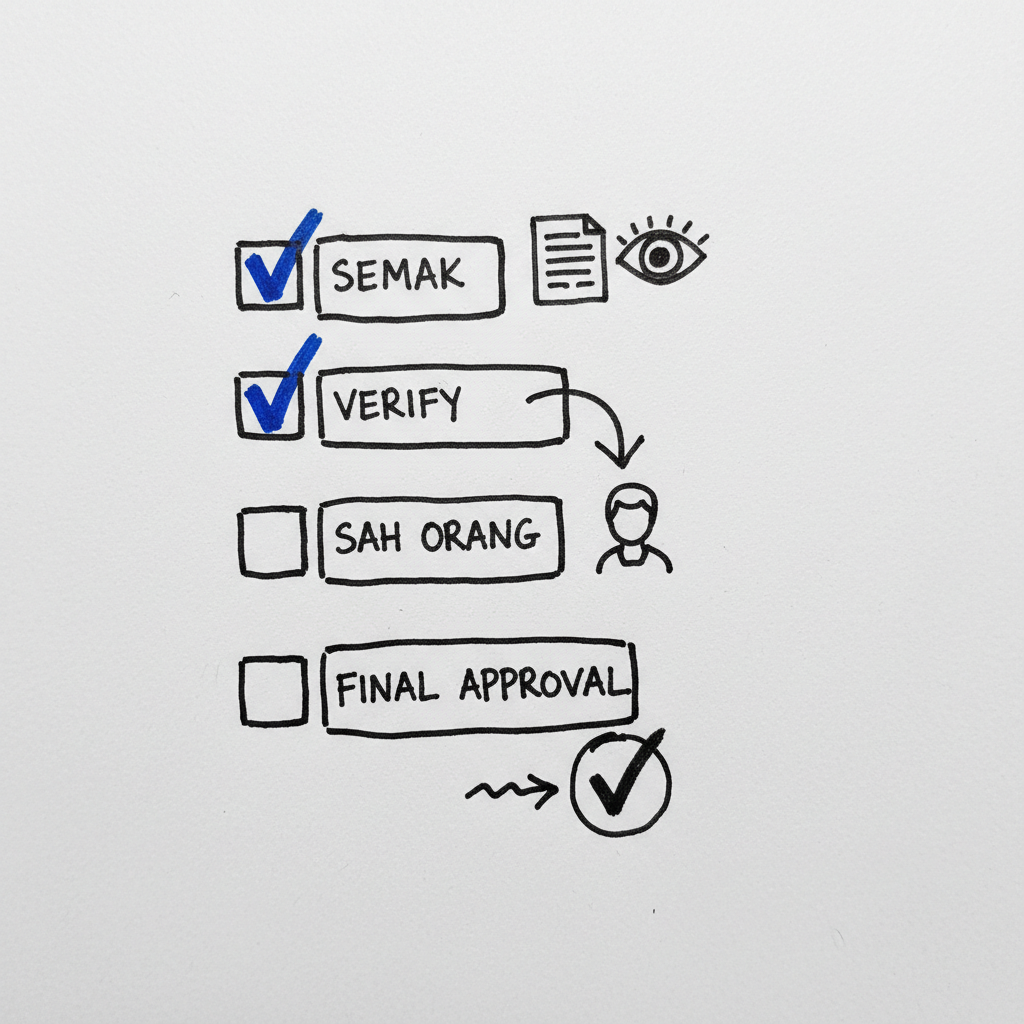
A four-step review framework keeps Malay AI output on-brand and accurate.
To get the most from ChatGPT's Malay support, treat it as a drafting partner rather than a final output machine. A simple four-step approach works well:
1. Give it context. Tell ChatGPT who the audience is, what tone you want, and what the goal is. For example, "Draft a polite customer reply in formal Bahasa Malaysia about a late delivery, addressed to a corporate client."
2. Review for tone. Read the output aloud. Does it sound like something your team would say? Adjust prompts and regenerate until the register fits.
3. Verify facts separately. For anything containing numbers, dates, policies, or commitments, confirm against the source before sending.
4. Keep a human in the loop. For customer-facing content, an approval step before publish protects your brand voice and catches tone issues AI can't judge.
This isn't about distrusting AI—it's about using it where it's strong and applying judgment where it isn't.
Using Malay AI output for customer experience
One of the most valuable applications is customer-facing communication. Many Malaysian customers expect service in Bahasa Malaysia, and ChatGPT can help you respond faster in the right language.
Scenario examples that work well:
- Standard enquiries about product availability, pricing, and shipping
- Order and delivery updates with polite, structured replies
- Appointment confirmations and reminders in Malay
- Resolving simple support issues with consistent, on-brand responses
For higher-volume businesses, there's a broader question worth exploring: whether these responses should become a structured workflow or an AI chatbot that handles first-level Malay enquiries, with escalation to humans for complex cases. That kind of capability, though, goes beyond off-the-shelf prompting and depends on your volume, data, and existing systems.
Malay content creation and brand communication
Beyond customer service, ChatGPT's Malay support can power marketing, social media, and internal communications. Malaysian teams commonly use it for:
- Drafting social posts in their campaign voice then refining locally
- Localising English brand content into natural Malay, not word-for-word translation
- Creating internal announcements and updates quickly
- Brainstorming Malay copy variants to test with different audiences
A caution worth repeating: localising into natural Malay is different from translating word-for-word. ChatGPT often produces a good first pass, but the final polish—matching your brand's personality and local expressions—still benefits from a native-speaking reviewer.
Responsibility and data considerations
Whenever you use ChatGPT for business content, the same guardrails apply as with any AI tool. A few reminders specific to Malay-language business use:
- Avoid pasting confidential customer data or sensitive commercial information into public tools.
- Set clear guardrails for what teams may and may not share, especially around customer or financial details.
- Treat AI output as human-reviewed drafts, not finished decisions.
- For regulated industries, ensure any compliance-relevant content is checked by the appropriate internal team.
These are practical housekeeping rules, not reasons to avoid AI. Organisations that build responsible AI training and clear usage habits tend to adopt AI far more sustainably than those that skip the guardrails.
When off-the-shelf Malay support isn't enough
There will be cases where prompting ChatGPT individually isn't enough—for example, a high-volume customer enquiry operation that needs consistent Malay responses inside a branded system, or an internal knowledge base employees need to search in Malay. In those situations, custom AI solutions such as a tailored chatbot, an internal copilot, or automated workflows can turn Malay language capability into repeatable business processes.
The distinction matters: ChatGPT's Malay support is a strong foundation, but some workflows need more structure than a general-purpose tool can provide.
The bottom line
ChatGPT's Malay language support is genuinely practical for Malaysian businesses. It handles standard writing, translation, and conversation well enough to save teams real time on customer communication, content creation, and internal documentation. The limitations are predictable—tone nuance, local context, and long-document consistency—and they're manageable if you keep human review in the workflow.
For most teams, the right starting point is simple: try it on a real Malay business task, review the output against your brand voice, and build the habits that make it reliable. When the volume or complexity outgrows individual prompting, that's the point to look at structured capability building or a custom solution.
If your team would like help deciding how ChatGPT—and other AI tools—can support your Malay-language workflows, contact AIHQ or explore role-based AI training to build practical capability across your department.
FAQ
Does ChatGPT support Bahasa Malaysia?
Yes. ChatGPT can write, translate, and converse in Bahasa Malaysia, including standard formal Malay (bahasa baku) and, with the right prompts, more casual conversational registers. Quality is strongest for standard business use cases like customer replies, marketing copy, and formal documentation.
Is ChatGPT's Malay output accurate enough for customer communication?
For most common use cases, yes—provided a human reviews it first. ChatGPT produces clean drafts for standard customer enquiries and replies, but tone nuances, local idioms, and brand voice may need correction. For anything containing facts, figures, or commitments, verify against a primary source before sending.
Can ChatGPT help translate English content into Malay for our business?
ChatGPT can translate between English and Bahasa Malaysia and is useful for localising content. However, word-for-word translation often feels unnatural. It's better to ask ChatGPT to localise content—drafting it in natural Malay that fits your audience and brand voice—rather than simply translating.
Is it safe to use ChatGPT for Malay content involving customer data?
Be cautious with confidential or sensitive information. Avoid pasting customer data or commercial secrets into public AI tools, and set clear guardrails for what teams may share. For regulated industries, ensure compliance-relevant content is reviewed by the appropriate internal team.
When should we consider a custom AI solution instead of using ChatGPT directly?
If your team needs consistent Malay responses inside a branded system, handles high enquiry volumes, or needs employees to search an internal knowledge base in Malay, a custom chatbot, internal copilot, or automated workflow may be more appropriate than individual prompting in ChatGPT.