General
ChatGPT in Malaysia: A Practical Adoption Guide for SMBs and Enterprises
· By AIHQ Team
Malaysian businesses are using ChatGPT. Some teams use it to draft emails. Others use it to summarise reports, write marketing copy or translate content into Bahasa Melayu. A smaller group is exploring how to integrate it into customer service workflows or internal knowledge systems.
But across many organisations, the adoption pattern looks the same: employees experiment individually, usage is inconsistent, and there is no organisation-wide guidance on what is appropriate, what is safe and what actually creates workflow value.
This guide is written for Malaysian SMBs and enterprises that want to move beyond casual ChatGPT experimentation into structured, responsible adoption. It covers local considerations — including data privacy, Bahasa Melayu reliability, regulatory context and practical integration — so you can adopt ChatGPT in a way that is useful, safe and aligned with your business needs.
Why a Structured Approach Matters for Malaysian Businesses
ChatGPT is an off-the-shelf large language model (LLM) developed by OpenAI. It is accessible, easy to use and broadly useful. But accessible tools do not automatically translate into valuable workflows.
When employees use ChatGPT without guidance, several common risks emerge:
- Data exposure: Confidential business information or customer data entered into public ChatGPT instances may not be protected under your organisation's data governance policies.
- Inconsistent output quality: Without shared prompt practices, one employee may get useful results while another gets unreliable or misleading output.
- Overtrust in AI output: Teams may treat ChatGPT responses as factual without verification, especially for financial figures, regulatory references or policy interpretation.
- Fragmented experimentation: Multiple departments try different approaches, learn different lessons and create no reusable organisational knowledge.
A structured approach does not mean restricting access. It means providing clarity on safe usage, building shared capability and aligning ChatGPT use with actual workflow needs. For Malaysian businesses, this is especially relevant given growing attention to data protection under the Personal Data Protection Act (PDPA) and sector-specific regulatory expectations.
ChatGPT in Malaysia: Language Support and Local Relevance
Bahasa Melayu and Multilingual Capability
ChatGPT performs reasonably well in Bahasa Melayu for general tasks — drafting emails, translating content, summarising meeting notes and generating social media posts. However, there are important limitations to understand:
- Formal versus conversational Malay: ChatGPT handles formal, structured Bahasa Melayu better than colloquial or dialect-heavy conversations. Expect stronger results with standardised language.
- Context-dependent accuracy: For technical, legal or highly specific local content, ChatGPT may misinterpret context or produce phrasing that sounds unnatural to native speakers.
- Cultural nuance: Certain expressions, local idioms or culturally specific references may not be rendered accurately. Human review remains important.
ChatGPT also supports Mandarin Chinese, Tamil and other languages relevant to Malaysia's multilingual business environment. This makes it useful for customer-facing content, internal communications and cross-language documentation — provided output is reviewed by a fluent speaker before use.
Local Knowledge and Current Events
ChatGPT's training data has a global cutoff and may not reflect recent Malaysian policy changes, regulatory updates or current events. For example, queries about the latest Budget announcements, recent PDPA amendments or current government AI initiatives may produce outdated or incorrect responses. Users should always verify against official sources for Malaysia-specific information.
Key Considerations for Responsible ChatGPT Adoption
Data Privacy and Confidentiality
Data privacy is the most common concern for Malaysian organisations evaluating ChatGPT. Here is what to consider:
- Public ChatGPT (free/Plus): Input data is used for model training by default. Organisations with confidential data should avoid entering customer information, financial records, trade secrets or personally identifiable information (PII) into public ChatGPT.
- ChatGPT Enterprise / API: OpenAI offers enterprise-grade options where data is not used for training and conversations remain private. For organisations handling sensitive data, these options are more appropriate.
- Organisational guardrails: Regardless of the version used, set clear policies on what types of data can be entered into AI tools. Train employees on these boundaries and review them regularly.
AIHQ helps organisations implement responsible AI usage frameworks. For teams scaling their ChatGPT usage, understanding these guardrails is a foundational step before broader rollout.
Accuracy and Human Oversight
ChatGPT generates responses based on patterns in its training data. It does not 'know' facts in the human sense. This means:
- Always verify factual claims against reliable sources, especially for financial, legal, medical or regulatory content.
- Use ChatGPT as a drafting and brainstorming assistant, not as a source of truth.
- Establish review processes for AI-generated content before it reaches customers, regulators or public channels.
Responsible AI training can help teams develop these verification habits. AIHQ's responsible AI training and governance workshops help organisations build these practices into daily workflows.
Practical Steps for Adopting ChatGPT in Your Organisation
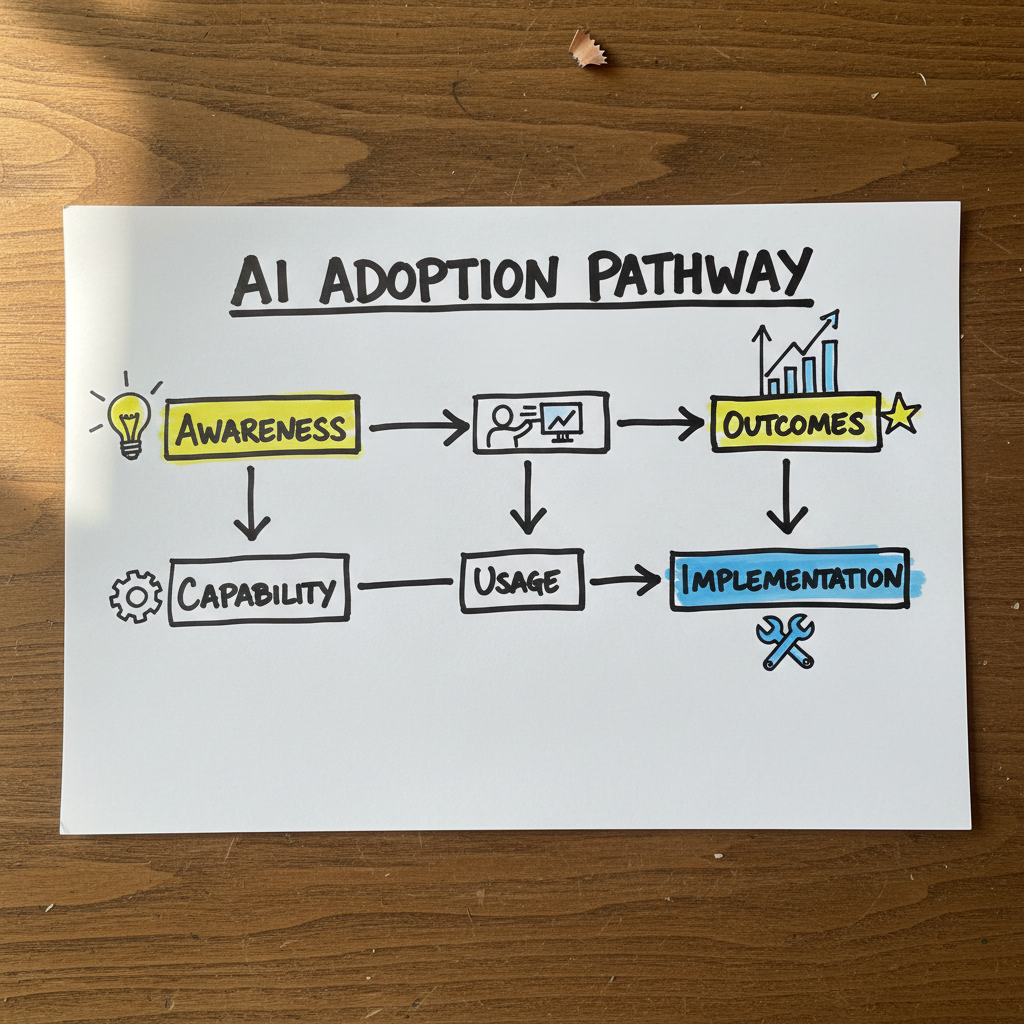
A structured AI adoption pathway helps Malaysian organisations move beyond casual experimentation.
Step 1: Set Usage Guardrails
Before rolling out ChatGPT broadly, define what is acceptable and what is not. A simple one-page AI usage policy might cover:
- Approved tools and versions (e.g., ChatGPT Enterprise vs public ChatGPT)
- Data classification rules (what can and cannot be entered)
- Output review requirements
- Reporting process for errors or concerns
This does not need to be a lengthy legal document. It needs to be clear, practical and communicated to all users.
Step 2: Build Role-Based Capability
Different teams use ChatGPT differently. Generic training that covers only prompt templates rarely leads to sustained adoption. Instead, build capability by role:
- Marketing teams: Drafting content, localising for Bahasa Melayu, generating campaign ideas, editing tone.
- Customer service: Drafting responses, summarising enquiries, translating customer messages.
- Finance teams: Summarising reports, drafting variance explanations, reviewing documentation.
- HR teams: Drafting job descriptions, summarising policies, generating interview questions, translating employee communications.
AIHQ's role-based AI training programmes are designed around how different teams actually work, helping participants apply AI to their specific workflows from day one.
Step 3: Pilot Before Scaling
Rather than rolling out ChatGPT organisation-wide immediately, identify one or two teams with clear, repetitive tasks that ChatGPT can support. Run a structured pilot with:
- Defined success criteria (e.g., time saved on drafting, improved consistency in customer responses)
- Regular check-ins on output quality
- A feedback loop for issues or challenges
This approach surfaces practical lessons before broader adoption. AIHQ's AI innovation bootcamp can help teams identify and prioritise use cases worth piloting.
Step 4: Review and Adjust
AI tools change rapidly. ChatGPT's capabilities, pricing and enterprise features evolve regularly. Revisit your adoption approach every quarter to ensure:
- Your usage policies remain relevant
- Your teams are applying what they learned
- New features or risks have been addressed
Common Challenges Malaysian Businesses Face with ChatGPT
Challenge 1: Bahasa Melayu Output Quality
Problem: ChatGPT produces awkward or grammatically inconsistent Malay text.
Approach: Use structured prompts with clear language instructions. Specify formal or casual tone. Always have a native speaker review public-facing Malay content. Consider building a custom glossary or style guide your team applies consistently.
Challenge 2: Data Privacy Concerns
Problem: Teams are unsure what is safe to enter into ChatGPT.
Approach: Create a simple traffic-light classification system. Green data (public information, general knowledge) is fine for public ChatGPT. Amber data (internal reports, non-confidential analysis) should be used with enterprise controls. Red data (customer PII, financial records, trade secrets) should never enter public ChatGPT.
Challenge 3: Inconsistent Usage Across Teams
Problem: Some departments use ChatGPT daily; others avoid it entirely.
Approach: Identify AI champions in each team who can model good usage habits. Share examples of real workflow improvements. Make training practical and role-specific rather than abstract.
Challenge 4: Overreliance Without Verification
Problem: Teams treat ChatGPT output as fact, especially for numbers or regulatory content.
Approach: Build verification into your workflow templates. For example, if ChatGPT drafts a financial summary, require a human to cross-check figures against source documents before submission.
When ChatGPT Is Not Enough
ChatGPT is a powerful general-purpose tool. But for some workflows, an off-the-shelf LLM is not the right solution:
- Internal SOP or policy Q&A: If employees frequently search for HR policies, operational procedures or compliance guidelines, a custom internal copilot trained on your documents may be more reliable than asking ChatGPT.
- Customer-facing chatbots: For customer enquiry handling, a custom AI chatbot with escalation workflows, brand-specific tone and data privacy controls may serve your business better than a generic ChatGPT interface.
- Automated reporting or dashboards: If your team needs structured data outputs, visualisations or workflow automation, a custom solution may be more appropriate.
AIHQ helps organisations evaluate whether off-the-shelf tools like ChatGPT are sufficient or whether a custom AI solution would better serve their specific workflows.
Building a Sustainable ChatGPT Adoption Pathway
The organisations that benefit most from ChatGPT are not the ones that buy the most subscriptions. They are the ones that:
- Start with clear guardrails and responsible use practices
- Build role-specific capability rather than generic awareness
- Pilot use cases before scaling
- Review and adjust regularly
- Recognise when a custom solution is more appropriate than a general-purpose tool
This pathway works for Malaysian SMBs and enterprises alike. The key is starting structured — not starting big.
If your organisation is ready to move beyond casual ChatGPT experimentation into structured adoption, AIHQ can help. With experience training over 9,000 professionals across corporate, public sector, professional and regulated environments, AIHQ supports organisations at every stage of the AI adoption journey.
FAQ
Is ChatGPT safe to use for Malaysian businesses?
ChatGPT can be used safely when organisations set clear guardrails. Avoid entering confidential customer data, trade secrets or personally identifiable information (PII) into public ChatGPT. For sensitive workflows, consider ChatGPT Enterprise or API options where data is not used for training. Always pair AI output with human verification, especially for financial, legal or regulatory content.
Does ChatGPT support Bahasa Melayu well?
ChatGPT handles formal Bahasa Melayu reasonably well for drafting emails, translations, summaries and content generation. However, it may struggle with colloquial dialects, highly technical local terminology or culturally specific expressions. Always have a native speaker review public-facing Malay content before publishing.
What should we include in a company AI usage policy?
A practical AI usage policy should cover approved tools and versions, what types of data can and cannot be entered, output review requirements, and a process for reporting errors or concerns. It does not need to be lengthy — it needs to be clear, communicated and updated as tools and risks evolve.
How can we help different teams use ChatGPT effectively?
Generic ChatGPT training rarely leads to sustained adoption. Instead, build capability by role — marketing, customer service, finance, HR and operations each use AI differently. Role-based training helps teams apply ChatGPT to their actual workflows from day one, creating stronger adoption than one-size-fits-all workshops.
When should we consider a custom AI solution instead of ChatGPT?
ChatGPT is excellent for general-purpose drafting, summarisation and brainstorming. However, for internal SOP Q&A, customer-facing chatbots, automated reporting or workflow-specific automation, a custom AI solution may be more reliable, secure and effective. AIHQ can help evaluate whether off-the-shelf tools or custom solutions are the right fit.
Is ChatGPT adoption different for Malaysian enterprises compared to SMBs?
The core principles — data privacy, role-based training, piloting before scaling, and responsible use — apply to both. Enterprises often need more structured governance, enterprise-grade tool options and broader rollout planning, while SMBs may benefit from lighter frameworks and faster implementation. Both benefit from a structured approach rather than ad-hoc experimentation.