General
ChatGPT Reseller Partner Opportunities in Southeast Asia
· By AIHQ Team

Enterprise demand for ChatGPT is growing rapidly across Southeast Asia. Organisations in Singapore, Malaysia, Indonesia and Thailand are moving beyond individual experimentation toward structured AI adoption — and they need trusted partners to help them get there.
For channel partners, IT resellers, system integrators and managed service providers, this creates a real opportunity. But building a ChatGPT reseller practice is not just about selling licences. It requires understanding how businesses actually adopt AI, what technical and governance considerations matter, and how to structure smart go-to-market models for both SMB and enterprise clients.
This guide covers the practical side of becoming a ChatGPT reseller partner in Southeast Asia — from revenue models and technical requirements to market positioning and value-added services.
Why ChatGPT Reseller Opportunities Are Growing in Southeast Asia
Southeast Asia's AI adoption is accelerating, but most organisations are still early in their journey. According to industry reports, generative AI interest in the region has surged, yet many businesses lack internal capability to deploy, govern and integrate AI tools into daily workflows.
This gap creates a clear role for channel partners. Companies do not just need access to ChatGPT — they need help with:
- Use-case identification — knowing where ChatGPT creates value in their specific workflows
- Technical integration — connecting ChatGPT to existing systems, data sources and security policies
- Governance and safe usage — setting boundaries around data sharing, accuracy and human oversight
- Capability building — training teams to use ChatGPT effectively and responsibly
A reseller partner who can offer more than a licence — who can guide clients through these adoption steps — becomes a strategic partner, not just a vendor.
Understanding the ChatGPT Reseller Partner Landscape
OpenAI's partner ecosystem includes several pathways. While specific programme details evolve, the general model involves authorised partners who can resell ChatGPT Enterprise, ChatGPT Team and API-based access to organisations.
What Partners Typically Offer
| Service | Description |
|---|---|
| Licence reselling | Subscriptions for ChatGPT Team, Enterprise or API credits |
| Implementation support | Technical setup, SSO integration, data governance configuration |
| Training and onboarding | Helping client teams adopt ChatGPT for real workflows |
| Custom solutions | Building chatbots, internal copilots or automation workflows on top of OpenAI |
| Managed services | Ongoing support, usage monitoring, prompt library management |
Who Becomes a ChatGPT Reseller?
The strongest candidates are organisations that already serve business clients in technology, consulting or managed services roles:
- IT resellers and VARs already selling cloud, SaaS and productivity tools
- System integrators managing enterprise infrastructure and security
- Management consultants advising clients on digital transformation
- Training providers helping organisations build workforce AI capability
- Agency and service providers building custom solutions for clients
If you already have trusted relationships with business decision-makers in Southeast Asia, you have a foundation to build on.
Revenue Models for ChatGPT Reseller Partners
Understanding how to structure pricing and packaging is critical. Here are the primary revenue models available to reseller partners.
1. Licence Reselling (Recurring Revenue)
The most straightforward model. Partners resell ChatGPT Team or Enterprise subscriptions and earn a margin on each seat. This provides recurring revenue with relatively low ongoing effort after the initial sale.
Best for: Partners with large existing client bases who can bundle ChatGPT into broader IT or SaaS portfolios.
Considerations: Margins on licence-only reselling can be thin. The real value is in the upsell to implementation and training services.
2. Implementation and Integration Services (Project Revenue)
Many organisations need help setting up ChatGPT securely. This includes:
- Single sign-on (SSO) configuration
- Data retention policy setup
- User access controls and role-based permissions
- API integration with existing tools (CRM, ERP, knowledge bases)
- Custom GPT configuration for department-specific use cases
Best for: Technical partners with integration and security expertise.
Considerations: Project-based revenue can be lumpy. Combine with retainer or managed service models for predictability.
3. Training and Adoption Services (Service Revenue)
Licences alone do not create adoption. Teams need training to use ChatGPT effectively. Partners can offer:
- Role-based AI training workshops (finance, HR, customer service, marketing)
- Executive briefing sessions for leadership teams
- Prompt engineering and workflow design sessions
- Ongoing coaching and community support
Best for: Partners with training, consulting or L&D experience.
Considerations: Training requires curriculum design and skilled facilitators. Partners without this capability can subcontract or white-label from specialist providers.
4. Custom Solution Development (High-Value Project Revenue)
Some client needs go beyond off-the-shelf ChatGPT. These include:
- Custom AI chatbots for customer service or internal knowledge bases
- Internal copilots trained on company SOPs and policies
- Automated reporting and dashboard workflows
- Agentic AI workflows for multi-step business processes
Best for: Technical partners or those collaborating with solution providers.
Considerations: Higher revenue per engagement, but also higher delivery complexity. Clear scoping and governance are essential.
SMB vs Enterprise: Two Distinct Go-to-Market Strategies
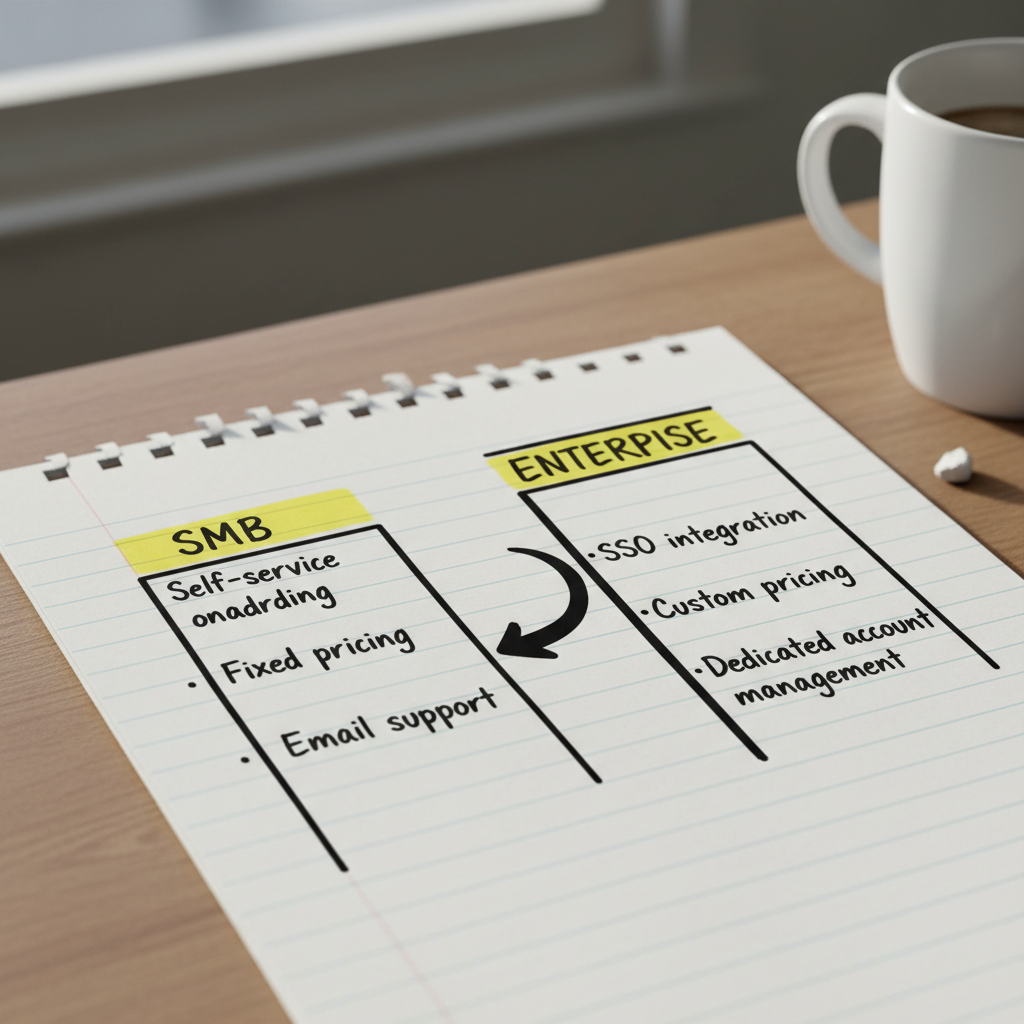
SMB and enterprise clients need different go-to-market strategies for ChatGPT reselling
Southeast Asia's market is not uniform. SMBs and enterprises have very different needs, buying processes and adoption maturity.
Serving SMB Clients
SMBs are typically earlier in their AI journey. They need simplicity, affordability and quick wins.
Go-to-market approach:
- Offer bundled starter packages (licence + basic training + setup)
- Use fixed-price packages to reduce friction
- Focus on productivity use cases: email drafting, content writing, research summarisation, meeting notes
- Provide self-service resources like prompt libraries and quick-start guides
- Sell directly to owners, founders or department heads
Typical deal size: Smaller per-client revenue, but higher volume potential.
Serving Enterprise Clients
Enterprises have compliance requirements, existing technology stacks and multiple stakeholders. They need structured adoption pathways.
Go-to-market approach:
- Start with a pilot or discovery phase rather than a full rollout
- Engage multiple stakeholders: IT (security, integration), HR/L&D (training), legal (governance), department heads (use cases)
- Offer phased adoption: awareness → capability → usage → outcomes → implementation
- Provide enterprise-grade governance, data retention and compliance support
- Build custom solutions where off-the-shelf ChatGPT is not enough
Typical deal size: Higher per-client revenue, longer sales cycles, multi-year potential.
Technical Requirements for ChatGPT Reseller Partners
Partners need to understand the technical landscape to support client conversations credibly.
Key Technical Considerations
Authentication and access control Enterprises require SSO integration (SAML, OAuth), role-based access controls and audit logging. Partners should be comfortable configuring these for client environments.
Data governance and privacy Different clients have different data policies. Partners should understand:
- How ChatGPT handles training data (API vs consumer vs enterprise)
- Data retention settings
- Zero Data Retention (ZDR) options for API usage
- Where data is processed (regional data residency considerations)
Integration architecture Common integration points include:
- CRM systems (Salesforce, HubSpot)
- Knowledge bases and document management
- Customer support platforms (Zendesk, Intercom)
- Productivity suites (Microsoft 365, Google Workspace)
- Internal APIs and databases
Custom solution deployment For partners offering custom solutions, familiarity with OpenAI APIs, vector databases (e.g., Pinecone, Chroma), embedding models and retrieval-augmented generation (RAG) patterns is valuable.
Building Your ChatGPT Reseller Practice: A Step-by-Step Approach
Step 1: Define Your Service Model
Decide which services you will offer in-house and which you will partner for. Most successful resellers start with licence reselling plus one service layer (training or implementation), then expand.
Step 2: Build Internal Capability First
Before selling ChatGPT to clients, your own team needs hands-on experience. Invest in:
- Internal AI training for your team
- A sandbox environment for testing use cases
- Documented best practices and case studies from your own usage
Step 3: Develop Your Go-to-Market Materials
Create clear, client-facing assets:
- One-pager explaining your ChatGPT offering
- Use-case examples relevant to your target industries
- Case studies or pilot results (even from internal use)
- Pricing guide for licence + service packages
Step 4: Start with Pilot Clients
Identify 2–3 clients willing to pilot with you. Offer reduced pricing in exchange for a case study and testimonial. Use these pilots to refine your delivery model and build proof points.
Step 5: Build a Partner Ecosystem
You do not need to do everything alone. Consider partnerships with:
- AI training specialists (for capability building services)
- Cloud infrastructure providers (for hosting and security)
- Custom AI solution developers (for complex implementations)
- Governance and compliance consultants (for regulated industries)
Common Pitfalls to Avoid
Treating ChatGPT as just another software licence ChatGPT adoption requires behaviour change, workflow redesign and governance. Clients who buy a licence without support often underuse or misuse it.
Overpromising what ChatGPT can do Be honest about limitations: accuracy risks, data privacy considerations and the need for human review. Clients trust partners who set realistic expectations.
Ignoring governance and responsible use Southeast Asian enterprises, especially regulated ones, care deeply about data security and compliance. Make governance part of your standard offering, not an afterthought.
Underpricing services Licence reselling margins are modest. Your real value is in services. Price training, implementation and managed services at rates that reflect the expertise involved.
Why Capability Building Matters in the Reseller Model
A ChatGPT reseller partner who only sells licences is replaceable. A partner who helps clients actually adopt and use ChatGPT effectively becomes indispensable.
This is where capability building — training teams, designing workflows, establishing governance — creates long-term client relationships and recurring revenue.
AIHQ works with partners across Southeast Asia who need support in this area. Whether you are looking for structured AI training programmes to offer your clients, leadership briefing materials for enterprise conversations, or guidance on custom solution scoping,building those capabilities internally or through trusted partners strengthens your reseller practice.
Final Thoughts
The ChatGPT reseller opportunity in Southeast Asia is real and growing. Enterprise and SMB clients alike need guidance — not just access to the tool. Partners who invest in structured go-to-market strategies, technical readiness and genuine capability-building services will be best positioned to capture this market.
The key is to start focused: pick a target segment, build a repeatable service model, and deliver real value in client adoption outcomes before scaling.
FAQ
What is a ChatGPT reseller partner?
A ChatGPT reseller partner is an authorised organisation that resells ChatGPT subscriptions (Team, Enterprise or API access) to business clients. Beyond licence reselling, many partners also offer implementation support, training, custom solutions and managed services to help clients adopt and use ChatGPT effectively.
How do I become a ChatGPT reseller in Southeast Asia?
The process typically involves applying through OpenAI's partner programme or working with an existing distribution partner. Requirements vary, but partners generally need to demonstrate technical capability, a client base, and the ability to support enterprise-grade deployments including SSO, data governance and integration support.
What revenue models work best for ChatGPT resellers?
Successful resellers typically combine licence reselling (recurring revenue) with implementation services (project revenue) and training/adoption services (service revenue). Licence-only margins are modest, so value-added services are where most partners build sustainable profitability.
Do I need technical expertise to be a ChatGPT reseller?
Some technical understanding is helpful, especially for enterprise clients who need SSO integration, data governance configuration and API connectivity. However, partners without deep technical capability can focus on training and consulting services, and collaborate with technical partners for implementation work.
What is the difference between serving SMB and enterprise clients?
SMBs typically need simple, fixed-price packages focused on productivity use cases, with quick onboarding. Enterprises require structured adoption pathways, multi-stakeholder engagement, governance and compliance support, and often custom solutions. Enterprise deals have higher revenue potential but longer sales cycles.
How can AIHQ support ChatGPT reseller partners?
AIHQ can support partners with structured AI training programmes, executive briefing materials, use-case discovery workshops and guidance on adoption pathways. For partners whose clients need custom solutions when off-the-shelf ChatGPT is not enough, AIHQ also provides custom AI solution consulting.