General
How to Choose a ChatGPT Enterprise Partner in Southeast Asia
· By AIHQ Team

Buying a ChatGPT Enterprise License Is Not the Same as Adopting It
Across Malaysia, Singapore and the wider Southeast Asian market, more enterprises are being approached by ChatGPT resellers and channel partners promising enterprise access to AI tools. The pitch usually sounds straightforward: sign here, get your licences, and your teams can start using ChatGPT securely.
The reality is more nuanced. A licence gives your organisation access to a powerful off-the-shelf tool — but access alone does not create adoption. The teams still need help understanding what to use it for, how to use it responsibly with company data, and how to measure whether it is actually improving workflows.
That distinction matters when you evaluate a partner. The strongest partner is not necessarily the one offering the cheapest licence or the fastest onboarding. It is the one that can support your organisation from licence purchase through to practical, responsible and measurable use.
This guide walks through the key criteria for evaluating a ChatGPT enterprise partner across Southeast Asia.
Start with Licensing Scope and Business Model
Before you compare partners, understand what you are actually buying. ChatGPT Enterprise licensing differs from consumer or team plans in meaningful ways — around data privacy, admin controls, usage governance and how the tool is connected to your organisation.
Questions to ask every partner:
- What exactly is included in the licence? Clarify seat counts, usage tiers, admin features and whether add-ons are charged separately.
- Who holds the commercial relationship? Understand whether you are buying directly, through a reseller, or through a managed service arrangement.
- What happens at renewal? Ask about pricing flexibility, committed spend and what changes if your usage grows or shrinks.
- Are there regional billing and invoicing arrangements? For organisations operating across Malaysia and Singapore, local currency and compliance-friendly invoicing can matter more than you expect.
A transparent partner will put these terms in writing and explain them plainly. If a partner cannot clarify the commercial structure, treat that as a red flag.
Check Regional Support and Implementation Capability
A partner that can sell you a licence but cannot support your teams once adoption begins is only a vendor, not a true partner. Regional support matters because AI adoption is not a one-day event.
Look for evidence that the partner can help with the practical side of adoption inside your organisation.
- Can they support you in your local timezone and language?
- Do they have delivery experience in Southeast Asia, not just a remote ticketing system?
- Can they help you identify which workflows are genuinely worth applying AI to?
- Can they build team capability so your people actually use the tool well?
This is where the difference between a licensing reseller and a capability partner becomes clear. A partner with structured training, role-based workshops and implementation experience can turn a licence purchase into a working capability.
Evaluate Security and Compliance Fit for Your Data
Data safety depends heavily on tool settings, organisational policies, the sensitivity of the data involved and how employees actually use the tool. No partner can claim that every AI tool is automatically safe for your company data.
The right partner will help you build guardrails. They should be willing to discuss:
- Which data types are appropriate to put into ChatGPT and which should stay out
- How admin controls and usage policies can be configured for your organisation
- How to align usage with internal policies and any sector-specific compliance expectations
- How to handle regulated sectors such as finance, healthcare, legal and government where additional care is needed
Ask the partner how they approach responsible and safe adoption, rather than how quickly they can switch everything on. An organisation scaling AI usage benefits from clear governance conversations before employees use the tool at scale.
Demand Proof of Real Deployment, Not Marketing Claims
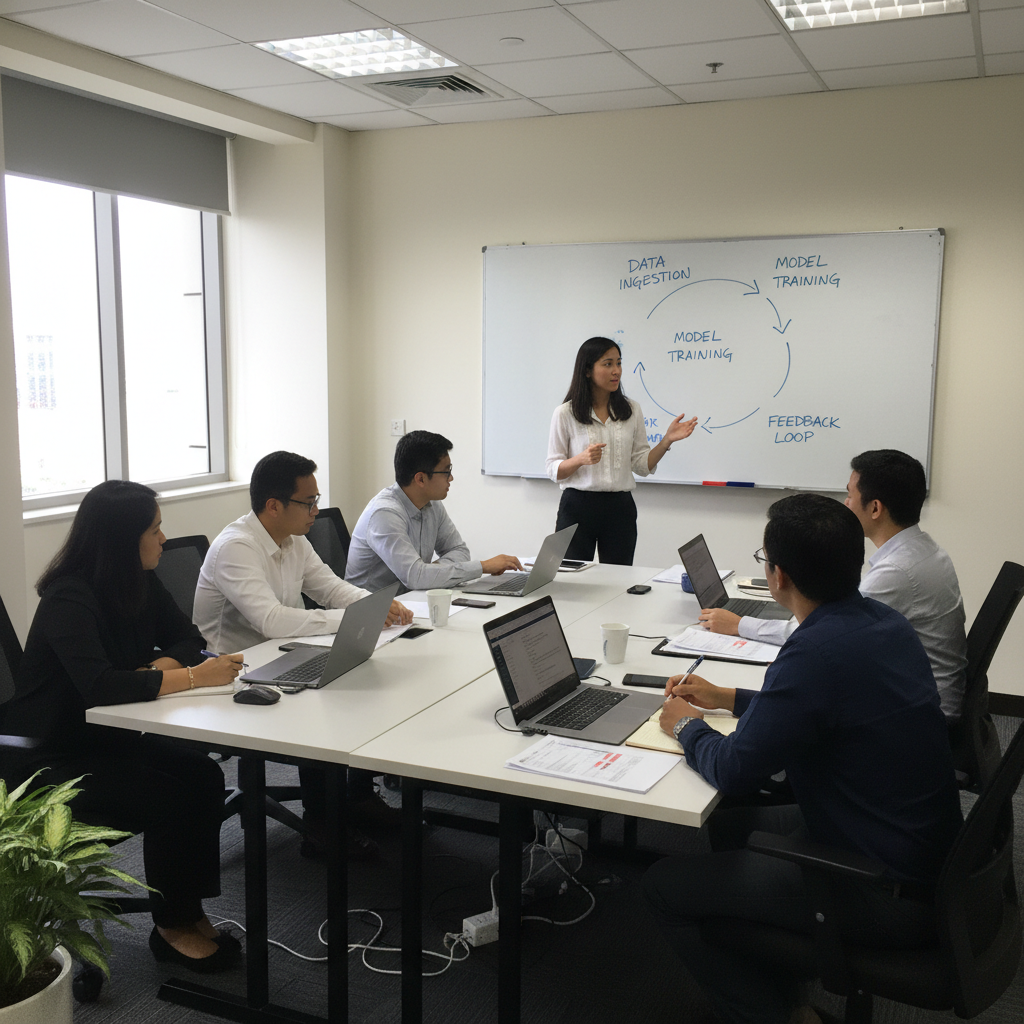
Look for partners who can show real teams trained and deployed, not just brochures.
Any partner can show you a brochure. The more useful signal is proof that they have helped organisations deploy and use ChatGPT or similar AI tools in a real working environment.
Ask for:
- Concrete deployment examples in your market or a comparable market
- The scale and nature of deployments — teams trained, departments supported, workflows improved
- The approach to adoption — was it a licence-only handover, or did it include training, use-case discovery and follow-through
- References you can speak to where appropriate
Regionally relevant proof matters. A partner with exposure to corporate, public sector and regulated environments across Malaysia and Singapore gives you more confidence than one whose only examples come from elsewhere.
Look for a Bridge Between Buying and Using
Here is the gap many enterprises fall into: they buy the licence, announce the rollout, and then discover that employees are not sure what to do with the tool. The result is an expensive licence with limited workflow impact.
The most valuable partners position themselves as a bridge between simply buying access and actually getting usable value. They treat licensing as a starting point, not the outcome.
Practical signals of this mindset include:
- A structured needs assessment before rollout
- Role-based training so HR, finance, operations and customer service teams learn relevant use cases
- Use-case discovery that connects the tool to real workflow pain points
- Governance and responsible-use guidance built into the programme
- A clear view of what off-the-shelf tools can do versus when a custom workflow may be needed
AIHQ, for example, has trained and engaged over 9,000 professionals across corporate organisations, government agencies, professional institutions, regulated sectors and leadership audiences. That experience spans capability building and practical adoption — the kind of support that turns a licence into everyday working practice.
Build an Evaluation Scorecard
To keep the comparison objective, score each partner across the following five areas on a simple 1–5 scale:
| Criterion | What to look for |
|---|---|
| Licensing clarity | Transparent scope, seats, pricing and renewal terms |
| Regional support | Local timezone, language and delivery presence |
| Security and compliance fit | Guardrails, data policies and sector awareness |
| Deployment proof | Real examples in your market or comparable markets |
| Capability support | Training, use-case discovery and ongoing adoption help |
A partner that scores strongly on licensing alone but poorly on capability support is likely to leave your teams with access but limited adoption. Weight the criteria according to your organisation's priorities, but do not ignore the capability dimension.
A Practical Path Forward
Choosing a ChatGPT enterprise partner in Southeast Asia comes down to a simple question: is this partner helping you buy a tool, or helping your people use it well?
The most effective partnerships cover both. You want someone who can manage the commercial and licensing side competently, and also support the human side of adoption — capability, workflow thinking, governance and follow-through.
Where off-the-shelf tools are not enough, a partner should be honest about that too. Some workflows benefit from a custom chatbot, an internal copilot or an automation step rather than a generic tool alone. A trustworthy partner will help you see the difference.
If you are evaluating options and want to think through what structured ChatGPT adoption looks like for your teams, a consultative conversation can help you map the path before you commit to a partner. The goal is not to rush a rollout, but to make sure the licence you buy translates into real, responsible workflow impact.
FAQ
What is the difference between a ChatGPT reseller and a ChatGPT implementation partner?
A reseller primarily handles the commercial licensing transaction. An implementation partner goes further — supporting team capability, use-case discovery, responsible-use guardrails and workflow adoption so the licence actually translates into practical use.
How do I choose between ChatGPT Enterprise and a custom AI solution?
Start with the workflow. Off-the-shelf tools like ChatGPT Enterprise are useful for broad writing, research, summarisation and analysis tasks. If a workflow needs organisation-specific knowledge, secure internal access or tight integration, a custom chatbot or internal copilot may be more appropriate.
Is ChatGPT Enterprise automatically safe for company data?
No. Data safety depends on tool settings, your policies, the sensitivity of the data involved and how employees use the tool. Organisations should set clear guardrails for responsible use, especially around confidential or sensitive information.
What should an enterprise ask a ChatGPT partner before committing?
Ask about licensing scope and renewal terms, regional support capability, security and compliance fit, proof of real deployments in your market, and whether they can support team training and adoption — not just the licence sale.