General
7 Free AI Certificate Courses to Kickstart Your AI Career (2026 Guide)
· By AIHQ Team

You do not need a large budget to begin an AI career. A growing number of reputable platforms now offer genuinely free AI certificate courses with verifiable credentials — the kind employers and HR teams actually recognise.
This guide curates seven of the best free options for 2026, each assessed for real-world value, certificate credibility and relevance to the Malaysian job market. Whether you are in HR, finance, marketing, operations or technical teams, these courses can help you move from AI curiosity into structured capability.
Why a reputable certificate matters
Anyone can watch a YouTube tutorial. A certificate from a recognised provider signals something more: that you have completed a structured curriculum, met assessed requirements, and can apply core concepts.
For Malaysian professionals, a recognised credential helps in a few practical ways:
- It strengthens internal proposals for role-based AI training and HRDC-friendly upskilling
- It gives hiring managers a benchmark for your foundational knowledge
- It builds a clearer learning pathway than scattered free videos
Bear in mind that certificates alone rarely land a role. Employers increasingly look for practical application — how you solve real workflow problems. Treat these courses as the foundation, not the finish line.
What makes a free AI certificate genuinely useful
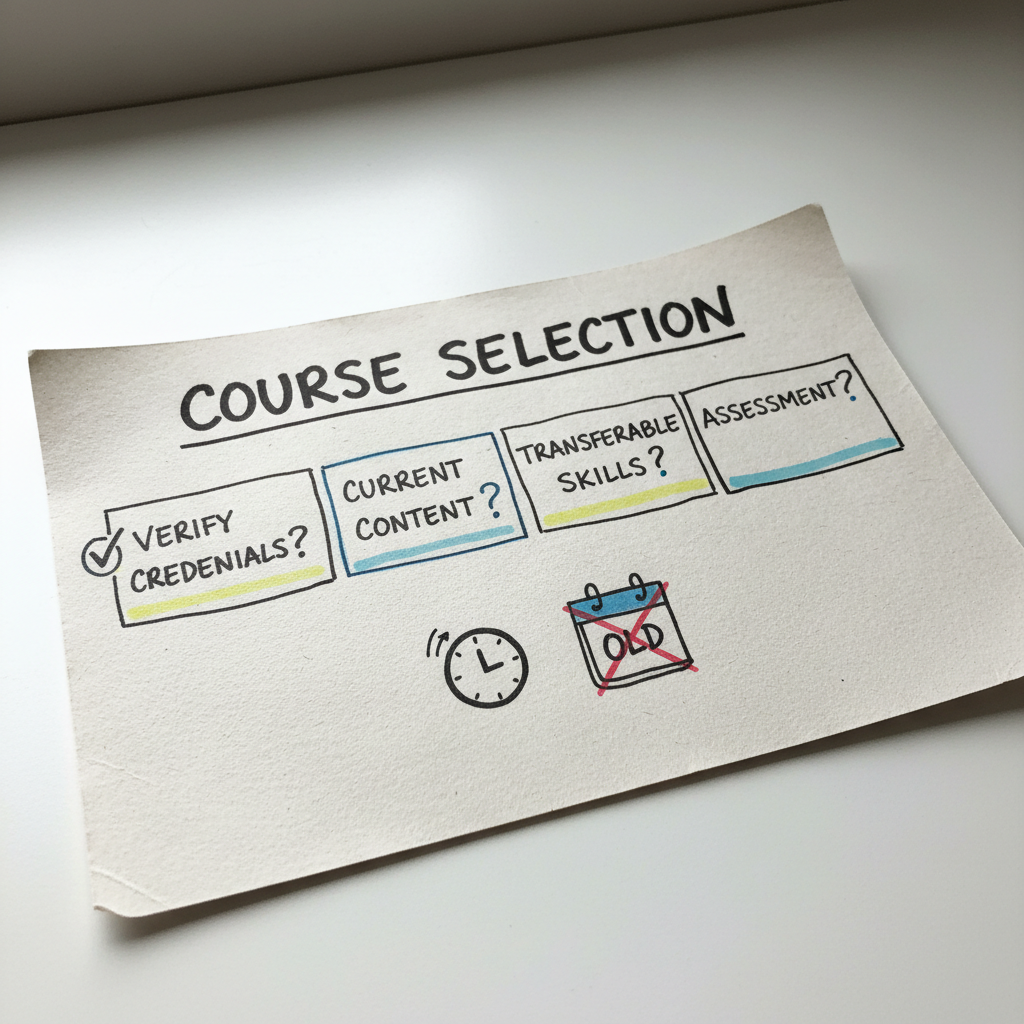
Before enrolling, check verifiability, freshness, transferable skills and built-in assessment.
Not every "free course with certificate" is worth your time. Before enrolling, ask a few questions:
- Is the certificate verifiable? A unique ID or credential link matters more than a PDF you could make yourself.
- Is the content current? The AI landscape shifts quickly. Courses from 2022 may teach outdated tools or prompts.
- Does it build transferable skills? Look for concepts you can apply across tools and roles, not just one chatbot's interface.
- Does it include assessment? Content you watch passively is harder to retain than material with hands-on exercises and quizzes.
The 7 free AI certificate courses for 2026
The courses below reflect a mix of generative AI foundations, prompt engineering, responsible use and practical application. They are grouped by the path each suits best.
1. Google AI Essentials (Coursera)
Google AI Essentials is one of the most recognised entry-level options available. It covers generative AI fundamentals, hands-on tool use, and practical applications for work.
- Certificate: Verifiable course certificate through Coursera
- Duration: Roughly 8–10 hours, self-paced
- Best for: General workforce, HR, marketing, operations professionals new to AI
- Why it stands out: The hands-on assignments build genuine tool fluency rather than passive watching
Note that you can audit the course content free, with a certificate available after completion — the fee applies at the certificate stage. Always check current pricing before starting.
2. Harvard's CS50 AI (edX)
For professionals who want a stronger technical foundation, Harvard's CS50 Introduction to AI with Python delivers a rigorous introduction to core concepts like search algorithms, machine learning and neural networks.
- Certificate: Verified certificate available through edX
- Duration: Roughly 10–12 weeks at a few hours per week
- Best for: Aspiring analysts, programmers and technically curious professionals
- Why it stands out: The name recognition and depth of material make it a strong credibility builder
This is more academic than tool-focused. Choose it if you want to understand how AI works beneath the interface.
3. DeepLearning.AI – Generative AI for Everyone (Coursera)
Taught by Andrew Ng, one of the most respected educators in AI, this course explains what generative AI can and cannot do — without heavy math.
- Certificate: Verifiable certificate through Coursera
- Duration: Roughly 8 hours, self-paced
- Best for: Managers, non-technical leaders and professionals wanting a grounded overview
- Why it stands out: Andrew Ng's clarity helps separate realistic use cases from hype
The "responsible use" framing aligns well with how organisations should approach adoption — understanding limits before scaling usage.
4. IBM Generative AI Fundamentals (Coursera)
IBM's offering is built around practical generative AI skills including prompt engineering and ethical considerations. It is a solid choice for professionals who want employer-recognised credentials quickly.
- Certificate: Professional certificate path with verified credentials
- Duration: Several self-paced specialisation courses
- Best for: Professionals seeking a structured multi-course credential
- Why it stands out: IBM's brand carries weight with many Malaysian employers
Given IBM's strong enterprise presence in Malaysia, this credential often resonates well during capability discussions.
5. Prompt Engineering for ChatGPT (Coursera / Vanderbilt)
Prompting is a practical skill, but it is only one part of capable AI use. Vanderbilt's course treats it properly — as a method, not a magic trick.
- Certificate: Verified certificate through Coursera
- Duration: Around 18 hours, self-paced
- Best for: Power users, content teams, customer service and support roles
- Why it stands out: It builds repeatable prompting systems you can reuse across workflow types
Combine this with broader AI foundations rather than treating prompting as the whole story.
6. Microsoft AI Skills / Microsoft Learn
Microsoft's free learning paths across its Learn platform cover Copilot, responsible AI and practical productivity workflows. Microsoft 365 is widespread across Malaysian workplaces, making this immediately applicable.
- Certificate: Microsoft Learn credentials and achievement badges
- Duration: Variable — from single modules to full learning paths
- Best for: Microsoft 365-heavy organisations and general workforce upskilling
- Why it stands out: Skills transfer directly into tools your team already uses daily
Microsoft Learn allows you to build role-based paths, aligning closely with how responsible organisations approach adoption.
7. The AIHQ Approach: Beyond Free Course Certificates
This is where free certificates reach their limit. Free courses deliver foundations. But sustained, measurable workplace adoption comes from role-based training, governance and workflow thinking.
Rather than a course to complete, think of this as a pathway: free certificates build awareness, then structured capability builds real workflow impact.
AIHQ has trained and engaged over 9,000 professionals across corporate, public sector, professional and regulated environments. Its practical, business-first training is designed to help teams apply AI to their actual daily workflows — not just collect certificates.
How to choose the right free course for you
Your role should shape your starting point:
- General workforce and HR teams: Start with Google AI Essentials for practical coverage
- Technical and analytical roles: CS50 AI builds deeper foundations
- Managers seeking strategic grounding: Andrew Ng's Generative AI for Everyone is ideal
- Heavy Microsoft users: Microsoft Learn paths apply instantly to daily work
- Content and customer-facing teams: Prompt engineering skills pay off fastest
Whichever path you choose, pair the certificate with genuine practice. Apply the concepts to a current work task, document the outcome, and build a small portfolio of examples.
Moving from certificates to capable teams
A single free certificate course can start a personal journey. Building organisational capability is a different scale of challenge. It requires:
- Role-based learning that connects AI to specific workflows
- Leadership alignment before large-scale rollout
- Clear guardrails for responsible and safe use
- Practical application and consistent review
Prompting is useful, but sustainable adoption depends on capability built around how your people actually work. That is where structured training programmes go well beyond what a self-paced course provides.
If your role-based AI training roadmap for 2026 extends beyond individual certificates, it is worth aligning your programme with practical, department-specific outcomes.
Start building real AI capability in 2026
Free certificate courses are an excellent first step. They build the awareness and confidence your people need to engage seriously with AI. For most organisations, however, the goal is not a collection of certificates — it is teams that use AI responsibly and effectively in daily work.
AIHQ's role-based AI training and custom AI solutions help organisations connect foundational learning to measurable workflow improvement. Whether you are planning workforce upskilling, a department workshop or a broader adoption roadmap, aligned support can make the difference between scattered experimentation and structured capability.
FAQ
Are free AI certificate courses actually free?
Many reputable platforms let you audit course content free, while a verified certificate may carry a fee. Courses like Google AI Essentials and DeepLearning.AI offerings follow this model. Microsoft Learn credentials are frequently free to earn. Always check current pricing before you begin.
Which free AI certificate is best for Malaysian job seekers?
There is no single best answer — your role matters. Google AI Essentials suits general professionals, CS50 AI builds technical depth, and IBM's Generative AI credentials carry strong employer recognition. For Microsoft-heavy workplaces, Microsoft Learn paths apply instantly to daily work.
Is a free AI certificate enough to get a job in AI?
A certificate builds foundational credibility, but employers increasingly look for practical application. Combine a certificate with real projects, document your outcomes, and pair individual learning with structured, role-based training to strengthen your profile.
Can these free courses support HRDC claimable AI training?
Self-paced external courses are typically outside HRDC training grant structures. Organisations planning claimable upskilling should explore structured corporate training programmes delivered by registered providers.