General
How to Choose an AI Consultant for Business Transformation in Southeast Asia
· By AIHQ Team
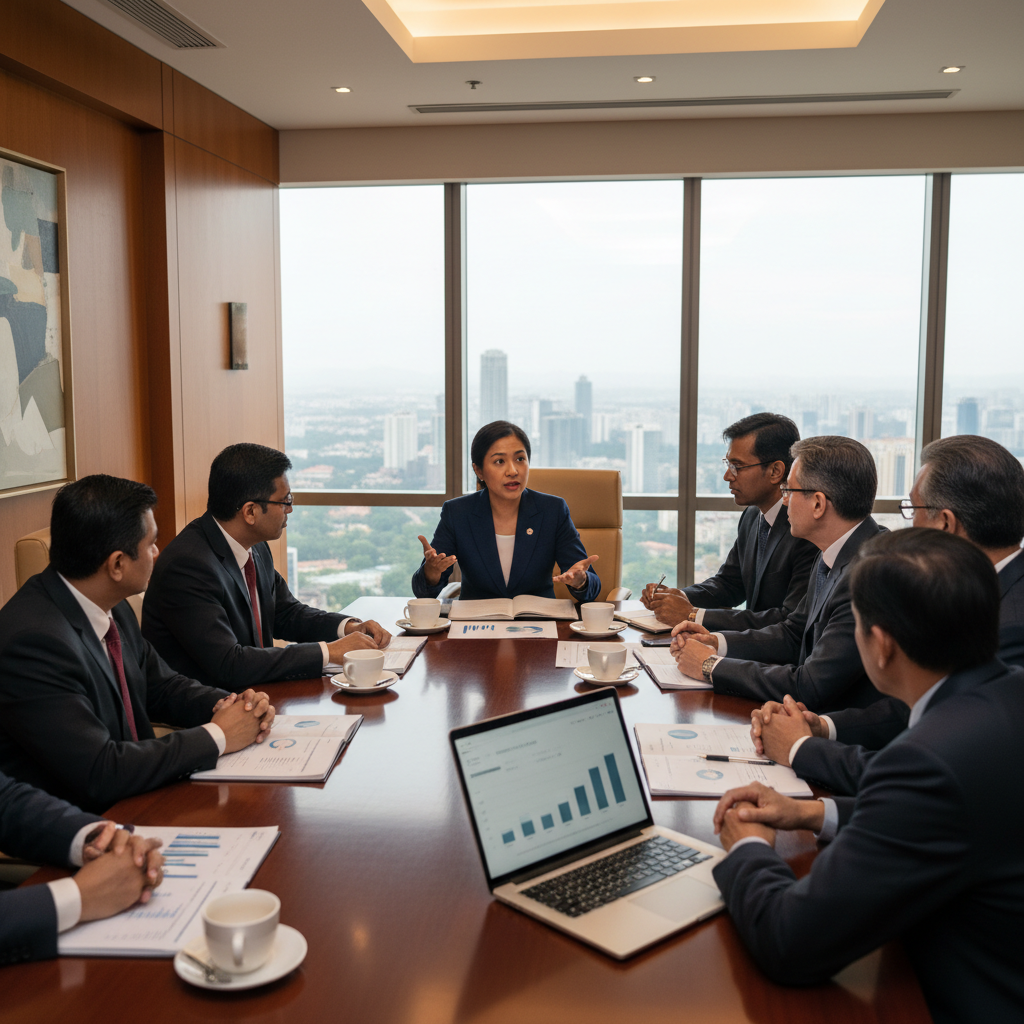
The AI consultant landscape in Southeast Asia has grown rapidly. Walking into any leadership meeting, you are likely to encounter firms offering AI strategy, AI training, AI workshops, AI implementation and AI transformation — sometimes all at once.
But here is the challenge that enterprise leaders face: when every consultant claims to do the same thing, how do you tell which one can actually help your organisation move from fragmented AI experiments to structured, practical business transformation?
This guide is written for CEOs, transformation leaders and senior management teams across Malaysia, Singapore and the wider Southeast Asian region. It covers the evaluation criteria that matter most when selecting an AI consultant for business transformation — regional expertise, industry alignment, data readiness, change management capability and the warning signs you should not ignore.
Why Business Transformation Needs More Than AI Tools
Before evaluating consultants, it helps to clarify what "AI for business transformation" actually means. Too many organisations treat AI adoption as a tool deployment: buy a subscription, run a workshop, tell employees to use it and expect transformation to follow.
Real business transformation through AI involves:
- Capability building — ensuring teams across the organisation can use AI safely and effectively in their daily workflows
- Leadership alignment — ensuring decision-makers agree on where AI creates value, where risks exist and what governance looks like
- Workflow improvement — identifying specific processes where AI reduces friction, improves decisions or frees up human capacity
- Governance and responsible use — setting guardrails before employees scale their AI usage
- Custom implementation where needed — recognising when off-the-shelf tools are not enough and a tailored solution is required
An AI consultant who only offers one part of this picture — just training, or just tool access, or just a strategy deck — is unlikely to drive transformation that sticks.
Related reading: For a deeper look at how organisations move beyond experimentation, see our guide on enterprise AI transformation.
What to Look for in an AI Consultant
Regional Expertise in Southeast Asian Markets
AI adoption looks different in Southeast Asia than in Silicon Valley, London or Tokyo. Regulatory environments vary. Workforce digital maturity differs across sectors. Bahasa Malaysia, Mandarin, Tamil and other languages create specific use-case requirements for customer-facing AI.
A strong AI consultant for business transformation in this region should demonstrate:
- Experience working with organisations based in or operating across Malaysia, Singapore and neighbouring markets
- Understanding of local regulatory and data-sovereignty considerations
- Familiarity with how HRD Corp (Malaysia) and SkillsFuture (Singapore) programmes support workforce upskilling
- Examples of projects delivered in the region, not only imported frameworks from other markets
Why this matters: A consultant who understands the regional landscape can help you avoid generic recommendations that do not account for local business culture, compliance requirements or workforce readiness.
Industry Alignment and Sector Experience
Every industry has different AI priorities. A bank in Kuala Lumpur concerned with regulatory compliance has different needs from a media group in Singapore optimising content workflows or a retailer managing supply-chain data across the region.
When evaluating an AI consultant, ask:
- Have they worked with organisations in or adjacent to your sector?
- Do they understand your industry's specific compliance, data and workflow constraints?
- Can they reference engagements with regulated environments, public sector bodies or professional institutions?
AIHQ, for example, has partnered with organisations across sectors including media (Media Prima Group), banking and insurance (Prudential BSN Takaful), professional services (ACCA, Institute of Internal Auditors Malaysia), property development (Lion Group, MTD Group) and public sector agencies (Selangor State Government, MDEC, SME Corp Malaysia).
This cross-sector experience means the consultant can draw on real use cases that resemble your context — not theoretical scenarios.
A Structured Approach to AI Adoption
Beware the consultant whose entire methodology is a one-day workshop. Sustainable AI transformation follows a progression:
- Awareness — building organisational AI literacy and understanding what AI can and cannot do
- Capability — developing role-based skills so employees can apply AI to actual work
- Practical usage — embedding AI into daily workflows with appropriate guardrails
- Measurable outcomes — tracking adoption, impact and areas for improvement
- Optional implementation — building custom solutions where off-the-shelf tools fall short
Look for a consultant who can articulate this kind of progression and show you how they have moved organisations through each stage. A structured approach is far more likely to produce lasting transformation than a series of disconnected initiatives.
Explore further: AIHQ's AI leadership briefing helps leadership teams align on strategy, risks and adoption priorities before large-scale rollout.
Data Readiness and Privacy Awareness
Data is the foundation of any meaningful AI transformation. Yet many organisations discover their data is scattered, unstructured, inconsistently governed or stored in ways that make AI adoption risky.
A capable AI consultant should:
- Help you assess your current data readiness without overpromising what is possible
- Understand the difference between using public AI tools safely versus building custom solutions that handle sensitive data
- Advise on data governance, privacy guardrails and responsible use policies
- Never tell you "all AI tools are safe for company data" — because data safety depends on tool settings, policies, data type, governance and usage behaviour
If a consultant glosses over data readiness or treats privacy as an afterthought, consider that a significant red flag.
Change Management and Workforce Capability
The most technically sound AI strategy fails if the workforce cannot or will not adopt it. An AI consultant focused on business transformation should bring change management thinking to the table.
This includes:
- Designing training that matches different roles — not one-size-fits-all sessions
- Building internal AI champions who can sustain momentum after the consultant leaves
- Helping leadership communicate the "why" behind AI adoption to reduce resistance
- Creating feedback loops so adoption challenges surface early
AIHQ's approach emphasises role-based capability building. For instance, the 12-month structured programme delivered for Media Prima moved teams through awareness, fundamentals, intermediate LLM skill-building and advanced application workshops — achieving 98% participant satisfaction and 90% increased practical knowledge.
Why this matters: A consultant who can show you a track record of workforce engagement rather than just a slide deck has something real to offer.
Red Flags When Evaluating AI Consultants
Not every consultant in the market can deliver what they promise. Here are warning signs to watch for:
| Red Flag | Why It Matters |
|---|---|
| Guarantees AI transformation or ROI | Real transformation depends on client context, adoption, governance and follow-through. No credible consultant guarantees outcomes. |
| Claims AI will replace your employees | This contradicts human-centred, capability-building approaches. AI supports employees — it does not replace them when deployed responsibly. |
| Promises immediate results from a single workshop | Sustainable adoption requires structured capability building, not a one-off session. |
| Cannot articulate a progression model | If their "methodology" is vague or generic, they likely lack structured experience. |
| Treats prompting as the complete solution | Prompting is useful, but sustainable adoption requires role-based capability, workflow thinking, governance and leadership alignment. |
| Lacks regional references or local case studies | Imported frameworks without local adaptation often miss cultural, regulatory and market realities. |
| Dismisses data readiness and privacy concerns | Data safety depends on your context. A responsible consultant will take this seriously from the first conversation. |
Questions to Ask Before Engaging an AI Consultant
When you meet a prospective AI consultant for business transformation, use these questions as your evaluation framework:
- What does your AI adoption methodology look like? Listen for a structured progression, not a one-size-fits-all solution.
- Can you share examples of organisations similar to ours that you have worked with? Look for sector relevance, not just any client name.
- How do you approach workforce readiness and change management? The answer should include role-based training, not just awareness sessions.
- What is your stance on data privacy and governance? A responsible consultant will address this upfront.
- How do you measure whether adoption is working? Look for practical metrics, not vague promises.
- What happens after the engagement ends? The best consultants build internal capability so your team can sustain momentum.
Explore further: AIHQ's custom AI solutions help organisations bridge the gap between off-the-shelf tools and the specific workflows that need tailored implementation.
Making Your Decision
Choosing an AI consultant for business transformation in Southeast Asia comes down to fit:
- Expertise fit: Do they understand your region, your sector and your specific challenges?
- Methodology fit: Do they offer a structured, progressive approach rather than a single intervention?
- Capability fit: Can they build your team's skills, or do they only deliver reports and recommendations?
- Values fit: Do they take responsible use, data privacy and governance seriously?
The right AI consultant will not promise you easy transformation. They will tell you what it honestly takes: leadership alignment, workforce capability, workflow redesign, governance and sustained commitment.
AIHQ has trained and engaged over 9,000 professionals across corporate organisations, government agencies, public sector bodies, professional institutions and regulated sectors in Southeast Asia. Our approach is practical, structured and grounded in real business workflows — not hype.
If you are evaluating how to move your organisation from fragmented AI experiments toward structured, practical transformation, we welcome the conversation.
Frequently Asked Questions
What does an AI consultant for business transformation actually do?
An AI consultant helps organisations assess readiness, define an adoption strategy, build workforce capability, establish governance and implement solutions where needed. They typically work across leadership alignment, training, workflow redesign and responsible use — rather than focusing on only one aspect.
How is an AI consultant different from an AI training provider?
A training provider focuses specifically on upskilling employees. An AI consultant may include training as part of their offering, but also addresses strategy, governance, data readiness, workflow improvement and custom implementation. The best consultants integrate both capability building and solution design.
When should my organisation engage an AI consultant?
Consider engaging an AI consultant when you have fragmented AI experimentation across departments, unclear strategy or governance, a large workforce that needs structured upskilling, or specific workflows that off-the-shelf AI tools cannot handle. Early engagement before large-scale rollout often produces better outcomes.
What questions should I ask an AI consultant before hiring?
Ask about their methodology, regional experience, sector expertise, approach to workforce readiness, data privacy stance and how they measure adoption success. Ask for examples of organisations similar to yours and what happened after the engagement ended.
How long does AI business transformation typically take?
Timelines vary significantly depending on organisational size, workforce readiness, data maturity and scope. Structured programmes often span 6 to 18 months, with early milestones focused on leadership alignment, capability building and pilot implementation rather than full-scale rollout.
Do I need an AI consultant if I already have a digital transformation team?
Possibly. An AI consultant brings specialised knowledge of generative AI, large language models, responsible AI governance and adoption frameworks that may differ from general digital transformation expertise. The right consultant complements your internal team rather than replacing it.
FAQ
What does an AI consultant for business transformation actually do?
An AI consultant helps organisations assess readiness, define an adoption strategy, build workforce capability, establish governance and implement solutions where needed. They typically work across leadership alignment, training, workflow redesign and responsible use — rather than focusing on only one aspect.
How is an AI consultant different from an AI training provider?
A training provider focuses specifically on upskilling employees. An AI consultant may include training as part of their offering, but also addresses strategy, governance, data readiness, workflow improvement and custom implementation. The best consultants integrate both capability building and solution design.
When should my organisation engage an AI consultant?
Consider engaging an AI consultant when you have fragmented AI experimentation across departments, unclear strategy or governance, a large workforce that needs structured upskilling, or specific workflows that off-the-shelf AI tools cannot handle. Early engagement before large-scale rollout often produces better outcomes.
What questions should I ask an AI consultant before hiring?
Ask about their methodology, regional experience, sector expertise, approach to workforce readiness, data privacy stance and how they measure adoption success. Ask for examples of organisations similar to yours and what happened after the engagement ended.
How long does AI business transformation typically take?
Timelines vary significantly depending on organisational size, workforce readiness, data maturity and scope. Structured programmes often span 6 to 18 months, with early milestones focused on leadership alignment, capability building and pilot implementation rather than full-scale rollout.
Do I need an AI consultant if I already have a digital transformation team?
An AI consultant brings specialised knowledge of generative AI, large language models, responsible AI governance and adoption frameworks that may differ from general digital transformation expertise. The right consultant complements your internal team rather than replacing it.