General
AI Agents for Business: A Practical Guide to Transforming Operations
· By AIHQ Team
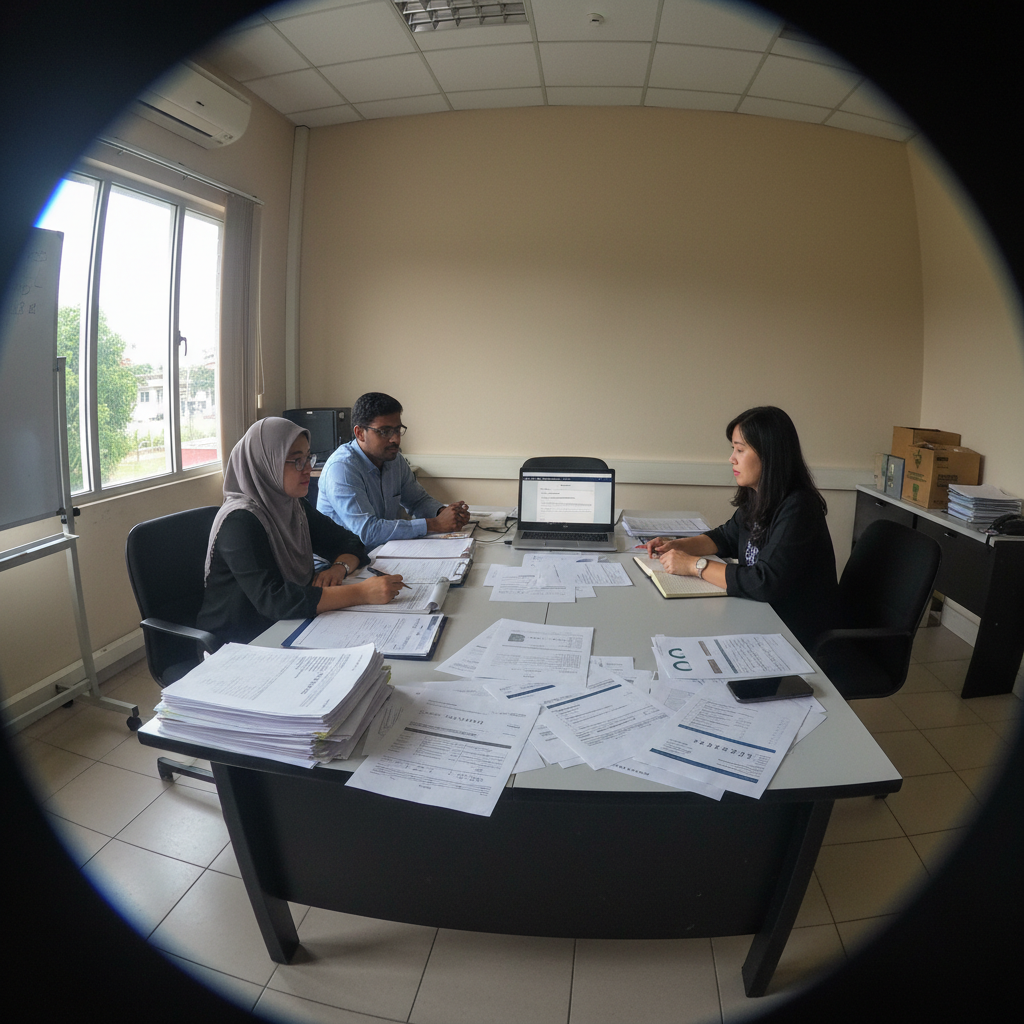
Most Malaysian SMEs that ask about AI agents do not have an AI problem. They have a follow-up problem, a quotation problem, and a reporting problem that nobody has had time to fix since the business doubled.
An AI agent is software that takes a goal, decides the steps, uses tools and systems, and completes a multi-step task with limited supervision. That is a useful definition, but it is also where most vendor conversations go wrong, because it invites the question "what can agents do?" instead of "which of my workflows is actually worth handing to one?"
The case for starting narrow, not big
A business owner running 30 to 300 staff rarely gets value from a company-wide agent rollout. What works is picking one or two contained back-office workflows, measuring the before-and-after, and only then expanding. Broad agent programmes fail in SMEs for a predictable reason: nobody owns the workflow, so nobody notices when the agent quietly stops working.
The practical starting rule: automate work that is repetitive, rules-based, high-volume and already documented. Leave anything involving a pricing exception, a customer complaint, a credit decision or a regulator to a human with the agent as a research assistant.
Nine agent use cases, with who they suit and what they cost

A practical map of nine agent use cases, who each one suits, and rough pilot cost bands.
Each entry below notes the criterion it meets, an effort and cost note in Malaysian ringgit terms, and the kind of SME it fits. Treat the MYR figures as planning bands for a scoped pilot, not quotations.
1. Enquiry triage and follow-up agent
Criterion: High inbound volume, repetitive qualification questions, leads lost to slow response.
Effort and cost: Low to medium. An off-the-shelf automation layer with a chatbot front end typically lands in the RM8,000 to RM25,000 range to configure and integrate with your CRM or WhatsApp Business setup. Ongoing cost is usually subscription-based.
Suits: Service businesses, training providers, property agencies, clinics with high enquiry volume.
This is the highest-return starting point for most SMEs because the failure it fixes is measurable in lost leads. It also pairs naturally with a custom AI chatbot for enquiry handling, with escalation to a human for anything outside the script.
2. Quotation and proposal drafting agent
Criterion: Sales team rewrites the same proposal structure weekly with different numbers.
Effort and cost: Low. If you already have a template library, an agent that assembles a first draft from your pricing sheet typically costs RM5,000 to RM15,000, or can be run with existing SaaS tools at near-zero setup cost.
Suits: Construction, manufacturing, professional services, event and design firms.
Important limit: the agent drafts; a human approves and prices. Never let an agent send a quotation unsupervised.
3. Invoice and document processing agent
Criterion: Finance team manually keys supplier invoices, delivery orders or claims.
Effort and cost: Medium. Expect RM15,000 to RM45,000 depending on document variety and whether your accounting system has an API. Poor-quality scans push this higher.
Suits: Trading, logistics, F&B groups, construction.
For finance-specific workflows that still require human judgment, the same principles apply as in our guide to AI use cases for finance teams: the agent extracts and prepares, the accountant validates and posts.
4. HR screening and onboarding agent
Criterion: Hundreds of applications per role, repetitive onboarding paperwork, slow policy answers.
Effort and cost: Medium. RM12,000 to RM35,000 for a screening and onboarding workflow. Note that candidate data is personal data — see the guardrails section below.
Suits: BPO, retail chains, F&B, education providers, recruitment-heavy SMEs.
The wider pattern is covered in AI for HR automation, which walks through hiring through to engagement.
5. Internal SOP and policy copilot
Criterion: Staff repeatedly ask HR and operations the same questions about leave, claims, SOPs, pricing rules.
Effort and cost: Low to medium. RM10,000 to RM30,000 for a knowledge-grounded copilot over your existing documents, plus a refresh process every time policies change.
Suits: Any SME above roughly 50 staff, multi-outlet operators, franchisors.
This is often the fastest visible win, because staff feel the benefit in week one.
6. Reporting and dashboard agent
Criterion: Someone spends Friday building the same management report from three systems.
Effort and cost: Medium. RM15,000 to RM40,000, heavily dependent on how clean your source data is.
Suits: Retail chains, distributors, agencies with multiple revenue lines.
Owners should be clear about the return here: the win is decision speed and consistency, not headcount reduction. It is worth exploring as part of custom AI solutions when off-the-shelf dashboards do not accommodate your process.
7. Customer support agent with human escalation
Criterion: High volume of repeat questions: order status, warranty, appointment changes, basic troubleshooting.
Effort and cost: Medium. RM20,000 to RM60,000 for a properly integrated agent with escalation paths and logging. Cheap versions create more frustration than they remove.
Suits: E-commerce, telcos and ISPs, e-warranty brands, service networks.
Non-negotiable: a clean, fast path to a human. Agents that trap customers are a reputational risk.
8. Procurement and vendor follow-up agent
Criterion: Purchase orders, delivery confirmations and price comparisons handled by email chase.
Effort and cost: Medium to high. RM25,000 to RM60,000, because it usually touches supplier systems you do not control.
Suits: Manufacturing, construction, retail with many SKUs.
9. Workflow automation across approvals
Criterion: Leave, claims, purchase approvals and notifications routed manually or through email chains.
Effort and cost: Low to medium. RM8,000 to RM25,000 depending on how many approval layers exist.
Suits: Any SME with more than one approval layer and an HR or admin team.
What an agent still cannot do well
Be sceptical of any pitch that treats agents as self-managing. Three limits matter for SME planning:
- Unusual exceptions. Agents handle the 80% well and the 20% badly, and the 20% is usually where the money and the risk sit. Budget for humans on the exception path.
- Poor source data. An agent reading a messy shared drive produces confident wrong answers. Data cleanup is often 40% of the project.
- Accountability. An agent cannot own a decision. Someone in your organisation must be named as responsible for each agent workflow and its outputs.
The common mistake is expecting a single tool — Copilot, ChatGPT or any one platform — to solve every workflow. Off-the-shelf tools cover a lot, but most SMEs eventually need a configured or custom component, whether that is a chatbot, an internal copilot or a defined automation workflow.
The guardrail question SME owners ask second
After "how much", the next question is almost always "what do I let it touch?" The answer depends on tool settings, data type, policies and usage behaviour — not on the tool's brand name.
In Malaysia, the Personal Data Protection Act 2010 (PDPA) sets the baseline for how personal data is collected, used, disclosed and retained, and the 2024 amendments raised the stakes with breach notification obligations and heavier penalties. In practice, that means an SME running an HR screening agent or a customer support agent is processing personal data inside a third-party system, and needs to be able to answer: where does the data go, how long is it kept, who can see it, and what happens if it leaks?
Three guardrails worth setting before any agent goes live:
- Data classification. Decide in writing which data categories agents may process: public, internal, confidential, restricted. Candidate IC numbers, bank details, medical information and customer payment data should never be pasted into consumer-tier tools.
- Named owners. Each agent workflow gets an owner, a review cadence and an offline switch.
- Human review for consequential outputs. Anything that affects a customer's money, a candidate's application or a regulatory filing gets a human sign-off step.
For organisations moving past the pilot stage, structured responsible AI training and governance sessions help teams turn these principles into day-to-day habits rather than a policy document nobody reads.
A six-week starting sequence
This is deliberately small. The goal of the first six weeks is one working agent and one measured result — not a roadmap.
Weeks 1–2: Map and pick. List every workflow where the same person does the same task more than five times a week. Score each on volume, repetition and documentation quality. Pick one. Write down the current baseline: hours per week, error rate, response time.
Weeks 2–3: Name the owner and the guardrails. Assign one internal owner with real authority. Agree what data the agent can access. Decide the escalation path.
Weeks 3–5: Build or configure. Build the narrowest version that works. Resist scope expansion, especially in the first fortnight when everyone suddenly has ideas.
Weeks 5–6: Measure and decide. Compare against the baseline. If it worked, document how it was built and who maintains it. If it did not, kill it quickly and apply the learning to the next workflow.
Two capability questions determine whether this survives month three: does anyone on your team understand the agent well enough to change it, and does leadership treat this as operating infrastructure rather than a project? Workflow audits and prioritisation exercises — the kind run in an AI use-case discovery workshop — exist precisely because most SMEs pick their first agent based on vendor enthusiasm rather than workflow reality.
The organisations that get this right tend to invest in their people at the same time as their tooling. AIHQ has trained and engaged over 9,000 professionals, and one 12-month capability programme with Media Prima recorded 98% participant satisfaction and 90% reporting increased practical knowledge and skills — figures specific to that programme, not a guarantee for anyone else. The pattern worth copying is the sequencing: awareness first, then fundamentals, then applied workflow work.
Frequently asked questions
How much does an AI agent cost for an SME?
For a single scoped back-office workflow, plan for RM5,000 to RM25,000 in setup for low-complexity cases such as document drafting or approval automation, and RM25,000 to RM60,000 for integrated workflows touching CRM, HR or supplier systems. Ongoing subscription and maintenance costs sit on top. These are planning bands, not quotations.
Can an AI agent work with Malaysian language content?
It can, but quality varies by task and language mix. Bahasa Malaysia and mixed English–Malay content generally performs well for summarisation and drafting, but accuracy drops on highly technical or regulatory text. Any agent handling customer-facing Malay content should have a review step while you establish reliability.
Do I need a custom solution, or is an off-the-shelf tool enough?
Start with off-the-shelf. If your workflow maps cleanly onto an existing tool's template, use it. Custom development makes sense when the workflow is specific to your business, when it must connect to internal systems, or when data cannot leave your environment. Many SMEs end up with a hybrid.
What is the biggest risk of giving an agent access to company systems?
Over-permissioning. An agent given broad access "to be useful" can surface or leak data it should never have seen. Grant the minimum access the workflow needs, log everything, and review permissions when staff change roles.
How do we know it is working?
Measure four things before and after: hours spent per week, error or rework rate, response or turnaround time, and the number of escalations to a human. If you did not record a baseline, you will not be able to tell improvement from noise.
Do we need training if we only deploy one agent?
Yes, but narrowly. At minimum, the workflow owner needs to understand the agent's limits, the review process, and where personal data goes. Broader role-based AI agents training becomes relevant when you scale to multiple workflows or departments.
FAQ
How much does an AI agent cost for an SME?
For a single scoped back-office workflow, plan for RM5,000 to RM25,000 in setup for low-complexity cases such as document drafting or approval automation, and RM25,000 to RM60,000 for integrated workflows touching CRM, HR or supplier systems. Ongoing subscription and maintenance costs sit on top. These are planning bands, not quotations.
Can an AI agent work with Malaysian language content?
It can, but quality varies by task and language mix. Bahasa Malaysia and mixed English–Malay content generally performs well for summarisation and drafting, but accuracy drops on highly technical or regulatory text. Any agent handling customer-facing Malay content should have a review step while you establish reliability.
Do I need a custom solution, or is an off-the-shelf tool enough?
Start with off-the-shelf. If your workflow maps cleanly onto an existing tool's template, use it. Custom development makes sense when the workflow is specific to your business, when it must connect to internal systems, or when data cannot leave your environment. Many SMEs end up with a hybrid.
What is the biggest risk of giving an agent access to company systems?
Over-permissioning. An agent given broad access can surface or leak data it should never have seen. Grant the minimum access the workflow needs, log everything, and review permissions when staff change roles.
How do we know it is working?
Measure four things before and after: hours spent per week, error or rework rate, response or turnaround time, and the number of escalations to a human. If you did not record a baseline, you will not be able to tell improvement from noise.
Do we need training if we only deploy one agent?
Yes, but narrowly. At minimum, the workflow owner needs to understand the agent's limits, the review process, and where personal data goes. Broader role-based AI agents training becomes relevant when you scale to multiple workflows or departments.