Malaysia AI market, policy & data
AI Governance for Malaysian Boards: A Six-Meeting Agenda for Overseeing AI Risk Without an In-House AI Expert
· By AIHQ Team
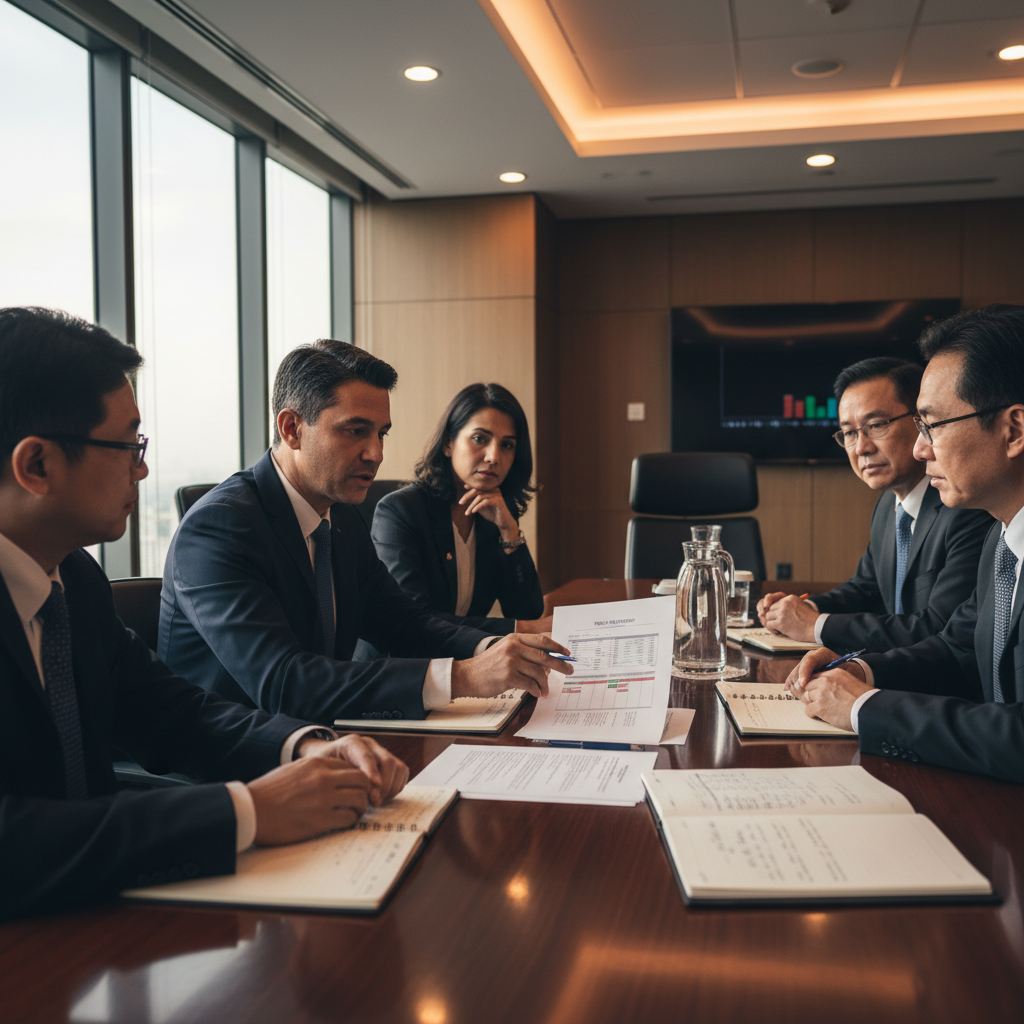
Most Malaysian boards already have AI in the building before they have an AI agenda
Somewhere in your organisation, a team is pasting a supplier contract into a free chatbot, a marketing unit is generating campaign copy with an unapproved tool, and a developer is testing a coding assistant against a production repository. None of this waited for a board decision. That is the usual starting condition for AI governance in Malaysia at board level — not a blank slate, but a live inventory nobody has counted.
The practical question for directors is narrower than the market conversation suggests. It is not "what is our AI strategy?" It is: what do we approve, what do we review, what do we ask, and in which meeting? This agenda is built for boards without an in-house AI specialist, with the IT or data lead supplying the working papers behind each decision.
One framing note for directors: Malaysia's AI guidance is still developing, and specific regulatory obligations vary by sector and by regulator. Treat everything below as governance practice that should be checked against your own legal and regulatory position, not as a compliance opinion.
Meeting 1 — AI inventory and risk tolerance statement
The first meeting is not about strategy. It is about counting. Management should present a one-page register of every AI tool and model in use, including tools bought on personal or departmental cards and tools embedded in existing software you already license.
Each line in the register needs five fields the board can actually interrogate:
- Tool and owner — named individual, not a department
- Data touched — public, internal, confidential or personal data
- Decision influence — does output inform a human decision, or trigger an action
- Third-party dependency — which vendor, which contract, which exit route
- Adoption evidence — number of active users last 30 days
That last field matters more than it looks. Licence counts and usage counts diverge sharply, and directors signing renewals should know which number they are paying for.
The second output of Meeting 1 is a risk tolerance statement — half a page that says plainly which categories of data may never enter a third-party AI tool, which use cases require human sign-off before action, and which require none. Boards commonly approve broad principles and then find no one can apply them. A tolerance statement with four or five explicit prohibitions is more useful than a policy with forty aspirations.
Owner: CIO, CTO or head of data. Typical outside support cost for a register and tolerance statement built with an adviser: roughly RM18,000–RM45,000 for a mid-sized Malaysian enterprise, depending on how many business units are in scope.
The related discipline for procurement teams is set out in this guide to AI procurement in Malaysia, which covers the tender language that prevents black-box lock-in before contracts are signed.
Meeting 2 — Policy sign-off that employees can actually follow
A policy document that says "use AI responsibly" changes no behaviour. Meeting 2 should approve a short set of rules that map to decisions employees make at their desks, plus a named escalation route for edge cases.
A workable structure has four parts:
- Permitted tools list — approved tools by data classification, reviewed quarterly
- Prohibited inputs — customer personal data, unpublished financials, legal advice, HR case files, source code under NDA
- Human review requirement — any AI output that reaches a customer, a regulator or a payment decision gets a named human reviewer
- Disclosure and record — where AI-assisted output must be flagged, and where a record must be kept
The board's decision at this meeting is not editorial. It is to confirm the prohibitions, confirm who owns enforcement, and set the review date. Direct the policy to be published internally with a one-hour briefing per department rather than an email attachment.
Owner: general counsel or chief risk officer jointly with HR. Cost signal: an internal drafting exercise costs staff time only; where outside facilitation is used for policy and behaviour mapping, Malaysian engagements typically run RM12,000–RM30,000, with governance workshops and responsible AI training often bundled in for department leads.
Meeting 3 — Vendor and third-party AI approvals
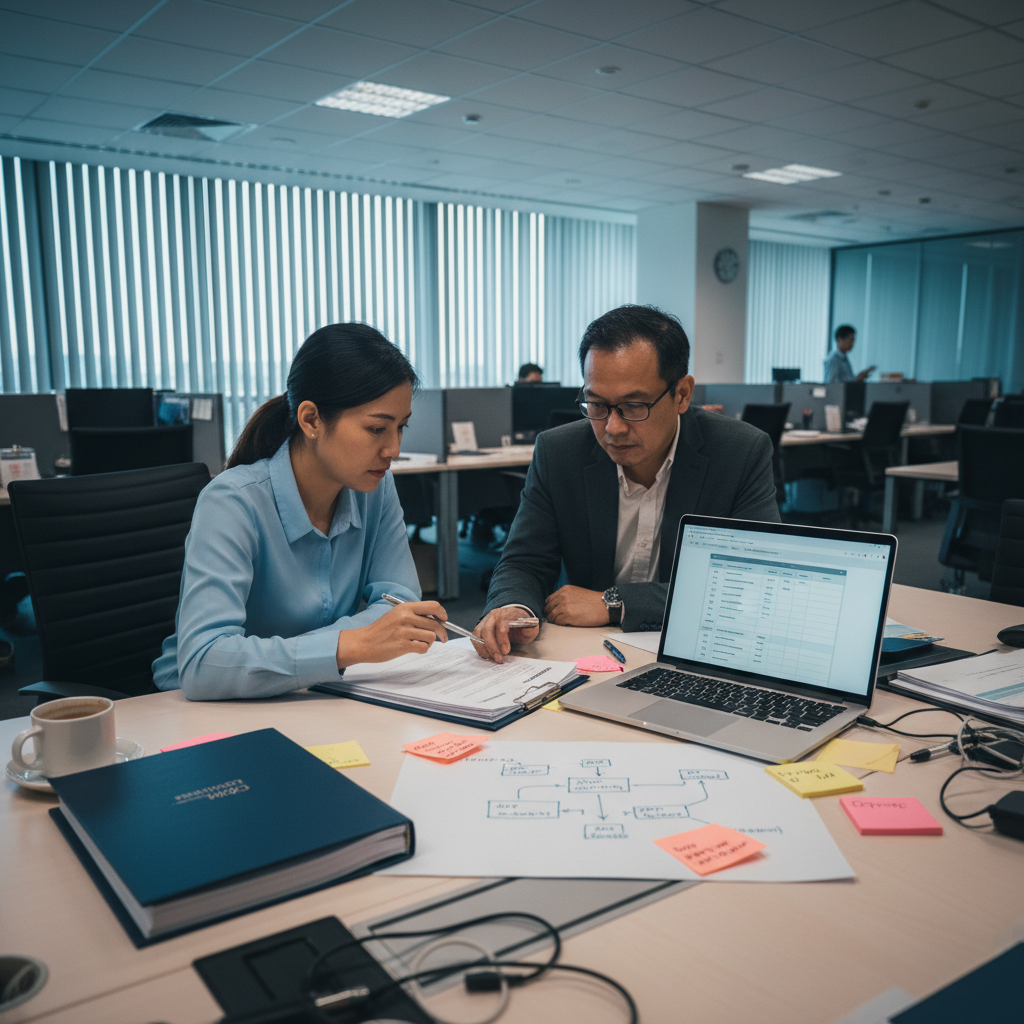
A standing set of vendor questions beats reviewing each AI supplier from scratch.
By the third meeting, management will be bringing AI purchases forward for approval, often with a strong commercial case and thin technical detail. Directors should have a standing set of questions rather than reviewing each vendor from scratch.
Require that every AI vendor paper answers: where data is processed geographically; whether customer data is used for model training and how that is contractually excluded; what happens to your data on termination; whether the vendor publishes model change logs; what the accuracy claim is based on; and what the exit and data extraction path looks like.
Two questions catch more problems than the rest. First: if this vendor doubles its price at renewal, what is our switching cost in months of engineering time? Second: who inside our organisation can explain, six months from now, why this model produced this output?
Owner: procurement lead with IT security. Decision cadence: quarterly approval window rather than ad hoc, so directors are not approving AI vendors in isolation between meetings.
Meeting 4 — Reviewing pilots and incident reports
This meeting has two halves and they should not be merged.
The first half reviews active AI pilots against agreed gates: baseline metric captured before launch, adoption count, and a stated go, fix or stop recommendation. The second half reviews incidents — including near misses. A near miss worth reporting is any case where AI output reached a customer, a regulator or a financial decision without the required human review.
Incident reporting only works if it is blameless in practice. If the first person to report a data leak into a chatbot is disciplined, the board will receive no further reports and will govern on an empty dashboard. Directors should explicitly ask how many incidents were reported and confirm the number is not suspiciously zero.
Owner: AI steering group chair, escalating to the board. Boards that have not yet constituted a working steering group will find the seats, cadence and decision rights laid out in this guide to the AI steering committee. Reporting structure here should follow your existing risk committee rather than creating a parallel one.
Meeting 5 — Capability and workforce assurance
AI governance fails at the point where employees have access to tools and no idea what good use looks like. This meeting reviews whether capability building is keeping pace with tool deployment — and whether spending on training is producing a change in behaviour or just attendance records.
Useful evidence at board level is narrow and behavioural: how many staff completed role-based training, how many now use an approved tool weekly, how many departments have a documented workflow that AI supports, and how many policy exceptions were requested. Attendance certificates are not evidence of capability.
Malaysian employers can often structure training against HRD Corp levy, which changes the economics meaningfully. Programmes can be structured to be HRDC claimable, subject to client eligibility, grant approval and HRD Corp submission requirements — which means the board paper should present the claimable amount as provisional, not as a budget certainty. Where employers want to sequence workforce readiness around a national touchpoint, the approach in this piece on national training week Malaysia is a useful reference.
Owner: CHRO or L&D head. Cost signal: role-based training for a 200–500 person organisation in Malaysia commonly lands between RM60,000 and RM250,000 annually depending on depth and delivery format, before any claimable offset.
Meeting 6 — Annual assurance and the statement to the board
Once a year, the board should receive a single assurance paper it could defend publicly if asked. It should cover: the AI register and its changes over twelve months, incidents and their resolution, vendor concentration risk, policy exceptions granted, capability metrics, and any regulatory developments relevant to the sector.
This is also the meeting at which the board decides whether its current governance is proportionate. Three signals suggest it is not: the register has grown faster than the review cadence; incidents cluster in one department; or pilots are launching without baseline metrics. Any of these is a reason to tighten the calendar, not to add another committee.
For organisations where the technical estate is unusual — including local model deployment or data residency constraints — the considerations in Malaysia GPT local AI models are relevant to the assurance paper.
A 26-week rollout timeline with owners
If the board is starting from nothing, the six meetings do not have to be spread over a full year. A compressed first cycle works:
| Weeks | Milestone | Owner |
|---|---|---|
| 1–4 | AI register built, data classifications agreed | CIO / head of data |
| 4–6 | Risk tolerance statement drafted | CRO with CIO |
| 6–10 | Policy drafted, department consultations run | General counsel, HR |
| 10–12 | Board approves register, tolerance statement and policy | Board / audit and risk committee |
| 13–18 | Vendor approval framework adopted; first quarterly vendor window | Procurement |
| 16–22 | Role-based training wave one for priority departments | CHRO / L&D |
| 22–26 | First assurance paper and calendar review | Board secretary with CRO |
Two sequencing mistakes recur. Boards approve policy before the register exists, so the policy addresses tools nobody uses. And boards approve tools before anyone has agreed what data may enter them, which produces exactly the incident the policy was meant to prevent. Register first, tolerance second, policy third.
Ten questions every director should put to management
- How many AI tools are in active use, and how many are on the register?
- Which of them can see confidential or personal data, and who approved that configuration?
- What is our switching cost, in months of engineering time, for our three largest AI dependencies?
- Which AI outputs reach customers or regulators without a named human reviewer?
- How many AI incidents and near misses were reported last quarter?
- What baseline metric was captured before each active pilot launched?
- Which vendors can change model behaviour without notifying us, and does the contract allow it?
- How many staff use an approved AI tool weekly, and how is that measured?
- What did we learn from the last policy exception we granted?
- If a regulator asked today how we oversee AI, what would we hand them?
If management cannot answer six of these ten, the governance calendar is not yet functioning — regardless of how complete the policy document looks.
What the numbers mean for a Malaysian team
The realistic first-year spend on board-level AI governance for a mid-sized Malaysian enterprise — register, tolerance statement, policy facilitation, vendor framework and one training wave — sits roughly between RM90,000 and RM325,000 depending on scope and whether outside advisers are used. That is small relative to the cost of a single data incident or a badly contracted three-year AI platform commitment.
The stronger argument for starting is structural. Boards that begin with an inventory and a tolerance statement reach defensible decisions faster than boards that begin with a strategy deck, because they are answering questions they can verify. IT and data leads who want to prepare the first board paper properly — and align it with the organisation's wider adoption pathway — can discuss your AI adoption needs with the AIHQ team, or read the wider guide to AI consulting Malaysia for how engagement scoping typically works.
FAQ
Does a Malaysian board need a dedicated AI committee?
Usually not at the start. Most boards can run AI oversight through the existing audit and risk committee with a fixed six-meeting agenda, escalating to the full board for policy sign-off and annual assurance. A separate AI committee is worth considering only if AI represents a material share of capital allocation or the organisation operates in a sector with specific regulatory expectations.
What is the minimum viable AI policy a board should approve?
A permitted tools list by data classification, four or five explicit prohibitions on inputs, a human review requirement for output reaching customers or regulators, and a named owner for enforcement with a review date. Length is not the measure; whether an employee can apply it at their desk is.
How much does AI governance work cost for a mid-sized Malaysian enterprise?
A first-year programme covering an AI register, risk tolerance statement, policy facilitation, a vendor approval framework and one role-based training wave commonly falls between roughly RM90,000 and RM325,000 depending on the number of business units and whether external advisers are engaged. Internal drafting reduces the lower bound substantially.
Who should own AI governance at management level?
Typically a steering group chaired by a chief operating officer or transformation lead, with the CIO or head of data supplying the technical register, the chief risk officer owning the tolerance statement and incidents, and general counsel owning policy. The board's role is approval, challenge and annual assurance, not operational management.
Can AI training be claimed against HRD Corp levy?
AIHQ programmes can be structured to be HRDC claimable, subject to client eligibility, grant approval and HRD Corp submission requirements. Boards should treat the claimable amount as provisional in budget papers and confirm eligibility with their HR and finance teams before committing.
How should boards handle AI regulation in Malaysia?
Obligations vary by sector and by regulator, and guidance continues to develop. Boards should ask management to report relevant regulatory developments at the annual assurance meeting, and should obtain their own legal advice on sector-specific requirements rather than relying on general market commentary.