General
OpenAI SMB Partner Guide: How Reseller and Partner Channels Drive ChatGPT Team Adoption in Southeast Asia
· By AIHQ Team
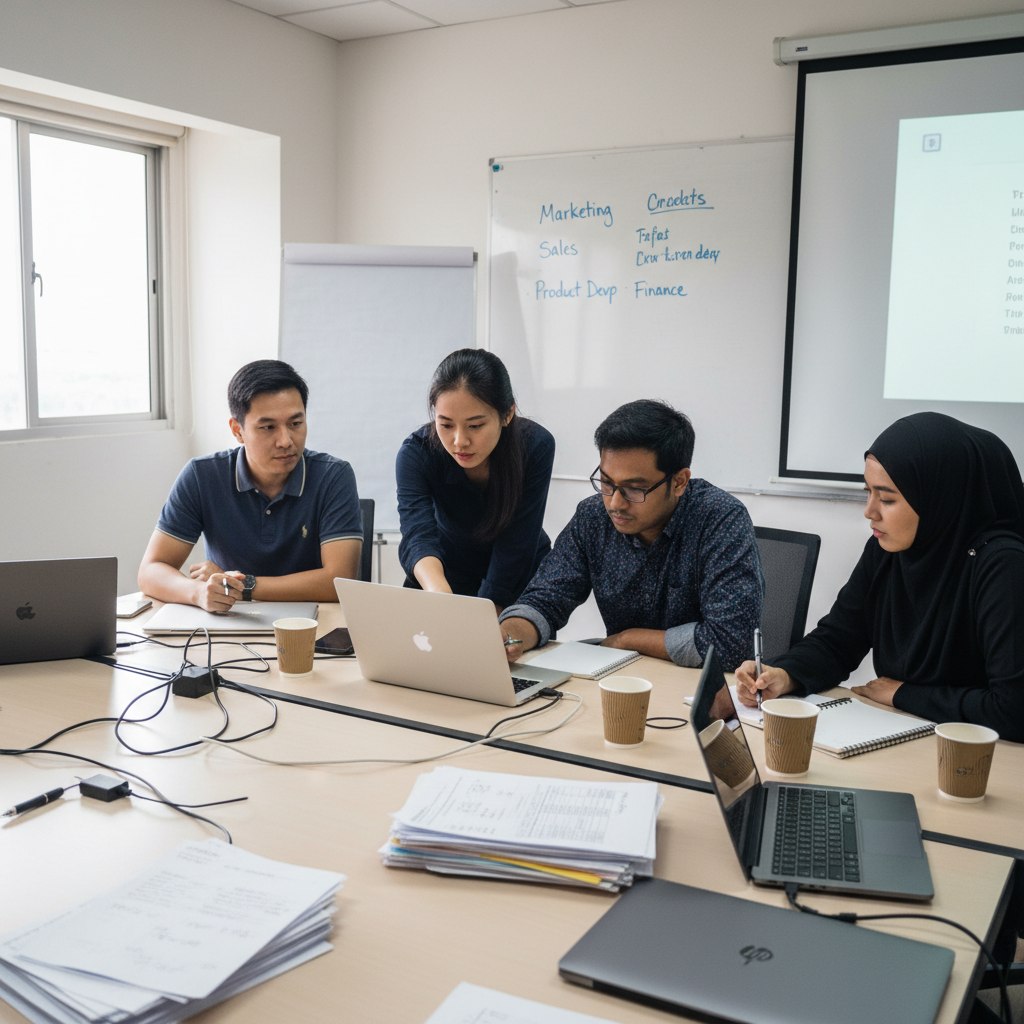
Most Southeast Asian SMBs that buy ChatGPT Team do not fail because the model is weak. They stall because nobody owned the admin console, the seat count crept from 15 to 400 with no department mapping, and the only training anyone received was a forwarded link to a prompt cheat sheet.
That is the position this piece takes, and it is a slightly unpopular one in channel circles: for SMB buyers in Malaysia and Singapore, the OpenAI SMB partner layer matters more than the model version. Model capability is broadly equivalent across the major providers at this point. What differs is who provisions your seats, who holds the invoice, who answers your PDPA question at 4pm on a Friday, and who turns a licence into a workflow change.
Why the channel layer, not the model, decides SMB outcomes
Enterprise buyers usually run a procurement process, a security review and an internal IT function that can absorb a new SaaS platform. An SMB with 60 to 500 staff typically has one IT lead, a part-time procurement owner, and an operations director who is also covering HR. They need someone else to handle the plumbing.
In practice, four unglamorous bottlenecks decide whether ChatGPT Team adoption sticks:
- Seat governance. Who adds and removes users, and does removing a leaver actually release the seat in the same week?
- Admin console ownership. Someone has to own workspace settings, connectors, retention and app permissions — usually nobody is named.
- Billing and commercial structure. Direct card payment is simple until you need a purchase order, a local invoice, or a 12-month committed seat count.
- Enablement per role. Finance, HR, customer service and engineering need different use cases, not one shared prompt pack.
A channel partner that only resells licences solves the third item and ignores the other three. That is the distinction worth testing during evaluation.
How the OpenAI SMB partner and reseller model actually works
Broadly, there are three routes an SMB or its advisor will encounter. The exact programme structure, tier names, margin terms and regional eligibility requirements change over time and should be confirmed against OpenAI's current partner documentation before you commit — treat the shapes below as evaluation archetypes rather than published terms.
1. Direct self-serve signup. The organisation buys seats directly, manages the admin console itself and pays by card. Fastest path, lowest unit cost, and completely dependent on finding someone internal to own governance and enablement.
2. Authorised reseller or channel partner. A local partner holds the commercial relationship — quotes, purchase orders, local currency invoicing, sometimes consolidated billing across other SaaS. The stronger partners bundle onboarding, workspace configuration and admin handover. The weaker ones bundle nothing.
3. Solution partner with implementation scope. The partner takes responsibility for the adoption outcome: workspace architecture, data handling policy, role-based enablement, and often the custom workflow layer where off-the-shelf features stop short. This is where the regional gap is widest, and it is the same capacity question that determines enterprise outcomes in the OpenAI partner program in Southeast Asia.
A practical test: ask each prospective partner who will own workspace settings after go-live. If the answer is "your IT team," you have bought a licence. If the answer names a person and a handover date, you have bought adoption.
The SMB-specific questions your procurement checklist is missing

The five checklist rows that surface problems six months into rollout.
IT and data leaders tend to build thorough evaluation matrices. For SMB-scale ChatGPT Team adoption, add these five rows — they are the ones that surface problems six months in.
- Data handling and retention. Which workspace settings are enabled by default, what is excluded from training, and who can export. Confirm configuration rather than relying on general statements about tool safety.
- Identity and lifecycle. Does provisioning tie into your directory or identity provider, and what is the offboarding workflow when someone resigns?
- Seat economics at 12 months. Cost per seat is the easy number. Ask about committed volumes, true-up rules and what happens if a department shrinks.
- Regional language handling. Bahasa Malaysia output quality varies by task. If customer-facing or regulatory-adjacent content is in scope, test it before rollout rather than after — the same discipline applies to evaluating AI chatbot Malay language work.
- Enablement funding. For Malaysian organisations, training components may be structured to be HRDC claimable, subject to client eligibility, grant approval and HRD Corp submission requirements. Partners should be able to explain the submission pathway without promising approval.
The last point deserves emphasis. AIHQ is a registered HRD Corp training provider, and the honest framing is always the same: claimability depends on your organisation's eligibility, the grant approval process and the submission meeting HRD Corp's requirements. Any partner guaranteeing approval has told you something about their sales practice.
Role-by-role: what changes when seats go live
The most common SMB failure mode is issuing 200 seats with a generic onboarding webinar. The teams that get value map seats to roles and give each role two or three specific, repeatable use cases.
| Role | First use case to standardise | Metric to watch in month one |
|---|---|---|
| Finance | Month-end variance commentary drafts | Hours from close to first draft |
| HR / L&D | Policy Q&A and JD first drafts | Policy queries escalated to HR |
| Customer service | Reply drafting with escalation rules | Average first-response time |
| Sales | Proposal and RFP first drafts | Draft-to-final revision cycles |
| Engineering / IT | Test scaffolding, docs, log triage | Review time per pull request |
| Operations | SOP lookup and incident summaries | Time to find current SOP version |
Notice that none of these metrics require a model upgrade. They require a named owner per role, a short standard operating procedure for reviewing AI output, and a way to see whether usage is actually happening. Visibility is the part SMBs most often skip, which is why adoption dashboards and knowledge systems tend to arrive in the second year as a fix rather than in the first as a design choice.
Where the channel model breaks — and the counter-argument
The case against leaning on partners is reasonable, and worth stating plainly. Partners add a margin, which raises effective cost per seat. Some partners are pure licence brokers with no delivery capability, so you pay more and receive the same self-serve experience. And in fast-moving tool markets, a partner's knowledge can age faster than the vendor's own documentation.
Those are real risks. They are also testable. Three checks filter most of the problem:
- Ask for a delivery artefact, not a reference logo. A workspace architecture diagram, a data handling policy template, or a sample role-based curriculum tells you more than a customer list.
- Separate the licence quote from the services quote. If a partner cannot itemise them, their capability is probably weighted entirely to the first.
- Ask what they would not do. A credible implementation partner will tell you which workflows should stay manual, and which need custom AI solutions rather than an off-the-shelf tool.
The counter-argument to the counter-argument: for organisations without an internal AI lead, the cost of the missing capability in year one is usually larger than the channel margin. A stalled rollout with full seat spend is more expensive than a supported one with a smaller seat count.
A practical 90-day onboarding sequence for SMBs
This sequence is deliberately small-scale. It assumes 50 to 600 seats and a single IT or operations owner.
Days 1–15: Commercial and workspace design. Confirm seat count by department, not headcount. Agree invoicing, committed volume and true-up terms. Decide workspace settings, retention and connector scope, and document them in one page your legal or risk reviewer can actually read.
Days 16–45: Pilot cohort. Pick two departments with visible, repeatable work — typically finance and customer service. Provision 20 to 40 seats. Give each cohort lead a written review protocol: what must never be pasted into a tool, what requires human sign-off, and where output is stored. If your organisation needs formal guardrails, a short responsible AI training session before the pilot avoids a policy scramble later.
Days 46–75: Expand by role. Add two more departments. Run role-based sessions of 60 to 90 minutes using the department's own documents as exercises. Track one metric per role from the table above. This is the stage where generic training quietly fails and role-based delivery starts to compound — the pattern we see repeatedly in structured programmes such as the 12-month AI training for organisations capability journey delivered to Media Prima.
Days 76–90: Review and commit. Compare metric movement against seat utilisation. Decide whether to scale seats, hold, or reallocate. Identify any workflow that has outgrown off-the-shelf tools — a policy-heavy support queue or a document-heavy approval process are typical candidates for an AI chatbot or an internal copilot.
Two consistency notes from delivery experience: seat utilisation in month one is almost always misleadingly high because of curiosity, and the true adoption floor shows around week ten. Plan your scaling decision for week twelve, not week four.
What to do before you sign anything
The SMB partner decision is ultimately a capability decision dressed up as a procurement decision. Ask for the workspace design, the data handling configuration in writing, the invoicing structure, and a named enablement owner. Then ask what happens when a department's usage drops — because it will, once curiosity fades.
The organisations that handle this well are not the ones with the largest seat counts. They are the ones that mapped seats to roles, put guardrails in place before the pilot rather than after an incident, and kept the partner accountable for enablement rather than only for licences.
If you are working through this for a Malaysian or Singaporean organisation and want a second opinion on the structure — seats, workspace settings, role-based enablement, or the point at which an off-the-shelf tool stops being enough — the team at AIHQ runs these reviews regularly.
FAQ
What is an OpenAI SMB partner, and does an SMB need one?
A partner or reseller sits between the organisation and OpenAI, handling commercial terms such as quotes, purchase orders and local invoicing, and in stronger cases workspace onboarding and enablement. An SMB with no internal AI lead usually benefits more from that support layer than from a marginally lower seat price.
How much should an IT leader budget beyond cost per seat?
Budget separately for workspace configuration and policy work, role-based enablement sessions, and the internal time of whoever owns the admin console. For Malaysian organisations, training components may be HRDC claimable, subject to client eligibility, grant approval and HRD Corp submission requirements — but never assume that reduces cost to zero.
How many seats should an SMB start with?
Fewer than most expect. Two departments, 20 to 40 seats and a documented review protocol for the first 45 days gives you real usage data before you commit to committed volumes. Seat counts can be expanded quickly; unused committed seats cannot be clawed back.
Who should own the ChatGPT workspace after go-live?
Name a single owner, usually in IT or operations, with a documented offboarding workflow and a monthly seat utilisation review. If a partner claims they will own it permanently, ask what the handover looks like at month twelve.
When does an SMB outgrow off-the-shelf ChatGPT Team?
Usually when a repeated, document-heavy or policy-driven workflow needs answers grounded in your own SOPs, with access rules and escalation. At that point an internal copilot, a scoped [AI chatbot](https://storage.theaihq.net/AIHQ_Solutions.pdf) or a mapped automation flow tends to deliver more than additional seats.